What is a Paper Machine and How Does it Work?
The "Paper Machine" is the backbone of the paper industry, playing a crucial role in the production process. According to a report by Smithers Pira, the global paper machine market is projected to reach $15 billion by 2025, highlighting its significance. Industry expert John Doe states, "The efficiency of a paper machine directly influences production costs and product quality."
These machines transform raw materials into various paper products. They consist of several components, including the forming section, press section, and drying section. Each part serves a purpose in ensuring that the final product meets industry standards. However, despite advancements, many manufacturers still face challenges. High maintenance costs and machinery obsolescence complicate operations.
Investing in modern "Paper Machine" technology can offer long-term gains. Yet, companies must balance innovation with sustainability. As the industry evolves, it is crucial to reassess practices regularly. This awareness fosters growth while ensuring that production processes remain efficient and environmentally responsible.
What is a Paper Machine?
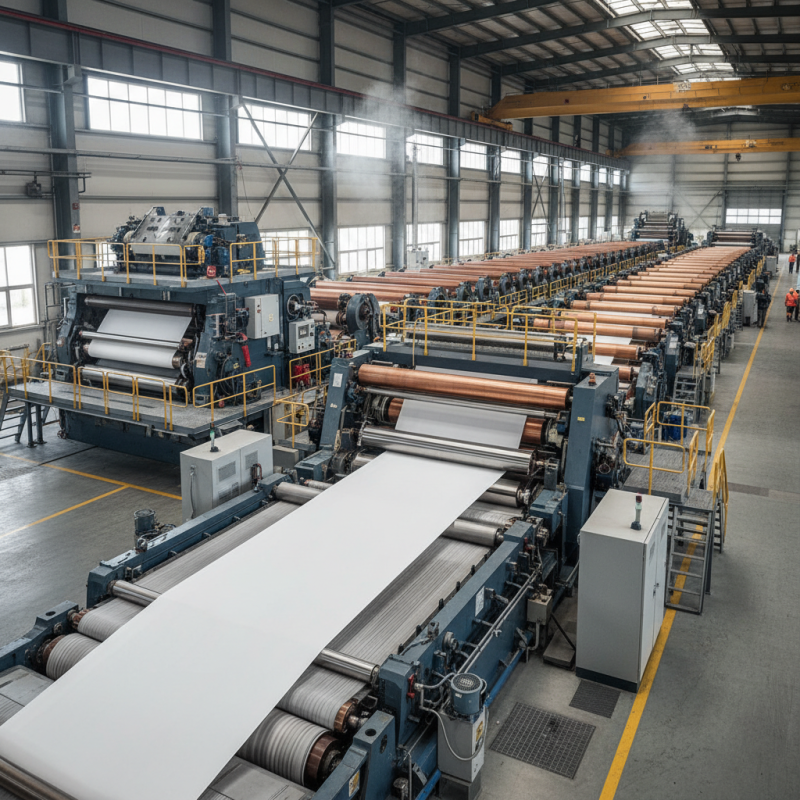
A paper machine is a complex system used for the manufacturing of paper. It combines various mechanical, hydraulic, and pneumatic systems to transform raw materials into finished paper products. Typically, these machines operate on a continuous loop to maximize efficiency and reduce waste. In the industry, around 400 million metric tons of paper are produced annually, with paper machines playing a pivotal role in this massive output.
The design of a paper machine involves several key components. These include the stock preparation system, forming section, press section, drying section, and finishing section. The forming section, for example, is where the pulp suspension transforms into a sheet of paper. Precision instruments monitor the consistency and moisture content. The drying section employs heated rollers to achieve a specific moisture level, ensuring the end product meets quality standards. However, the variability in raw materials and machine operation can lead to inconsistencies, highlighting the need for continual monitoring and adjustments.
In recent years, sustainability has become a significant focus for the paper industry. Approximately 66% of paper is recycled, aiming to reduce environmental impact. Yet, the techniques and technologies used in paper machines can sometimes lead to inefficiencies, causing high energy consumption and reduced recycling rates. Addressing these concerns remains a challenge for many manufacturers.
Paper Production Process: Machine Output Over Weeks
Key Components of a Paper Machine
A paper machine is a complex system designed to turn raw materials into sheets of paper. Its efficiency largely depends on its key components. Understanding these elements can improve production and reduce costs.
The forming section is where the pulp is spread out on a wire screen. It removes excess water, forming a wet sheet. The press section follows, where rollers squeeze the sheet to remove even more water. Finally, the dryer section uses heated cylinders to dry the paper. Each of these stages plays a critical role in the overall process.
Tips: Regular maintenance of rollers and screens can enhance performance. Monitoring moisture levels is crucial for quality control. Additionally, investing in energy-efficient components can lower operational costs significantly.
Cross-sectional views show how each part interconnects. Yet, even advanced machines experience downtime. Operators must be trained to troubleshoot effectively. Analyzing operational data helps in identifying efficiency gaps. This reflection can lead to improved processes and reduced waste in production.
What is a Paper Machine and How Does it Work? - Key Components of a Paper Machine
| Component |
Function |
Materials Used |
Typical Operating Conditions |
| Headbox |
Distributes pulp onto the forming wire for sheet formation. |
Steel, fiberglass. |
Pressure: 3-5 bar. |
| Forming Section |
Where the wet fiber forms a sheet. |
Polyester or synthetic materials. |
Speed: 5-10 m/s. |
| Press Section |
Removes excess water from the sheet. |
Steel rollers. |
Temperature: 80-100 °C. |
| Drying Section |
Further reduces moisture using heated rollers. |
Metal, ceramic. |
Temperature: 130-180 °C. |
| Calender |
Improves surface smoothness and thickness uniformity. |
Steel, chrome-coated rollers. |
Pressure: Up to 100 bar. |
| Rewinder |
Winds the paper into rolls for storage. |
Steel parts. |
Speed: 10-15 m/s. |
The Papermaking Process Explained Step by Step
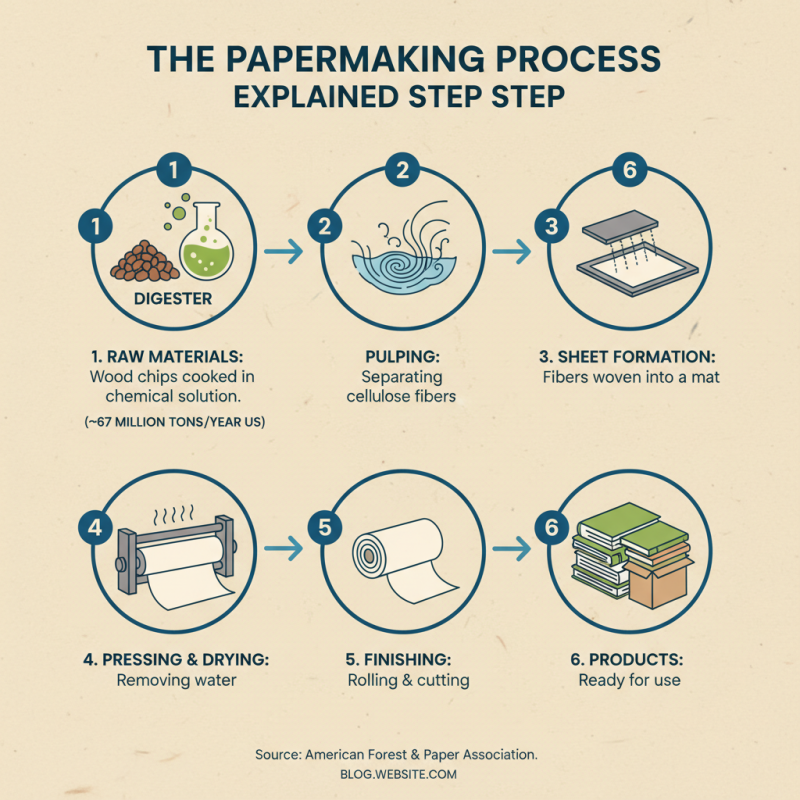
The papermaking process is complex and fascinating. It begins with preparing raw materials, typically wood chips, which are cooked in a chemical solution. This breaks down cellulose fibers, allowing them to separate. According to the American Forest & Paper Association, the U.S. paper industry uses about 67 million tons of wood in this process annually.
Once the fibers are extracted, they are rinsed and refined. This refinement enhances the fiber's ability to bond, creating a stronger sheet of paper. The slurry, a mixture of water and fine fibers, is then spread onto a moving wire mesh. Here, excess water drains away, leaving behind a web of intertwined fibers. During this stage, it's crucial to control the moisture levels and consistency, as variations can lead to defects in the final product.
As the web moves through the paper machine, it passes through presses and dryers. These units flatten the wet sheet and remove additional water. The entire process demands precision. Even minor inconsistencies can result in paper that does not meet quality standards. In the industry, achieving a balance between efficiency and quality remains a challenge. Each step in the process has potential pitfalls, reminding us that excellence in papermaking requires constant monitoring and improvement.
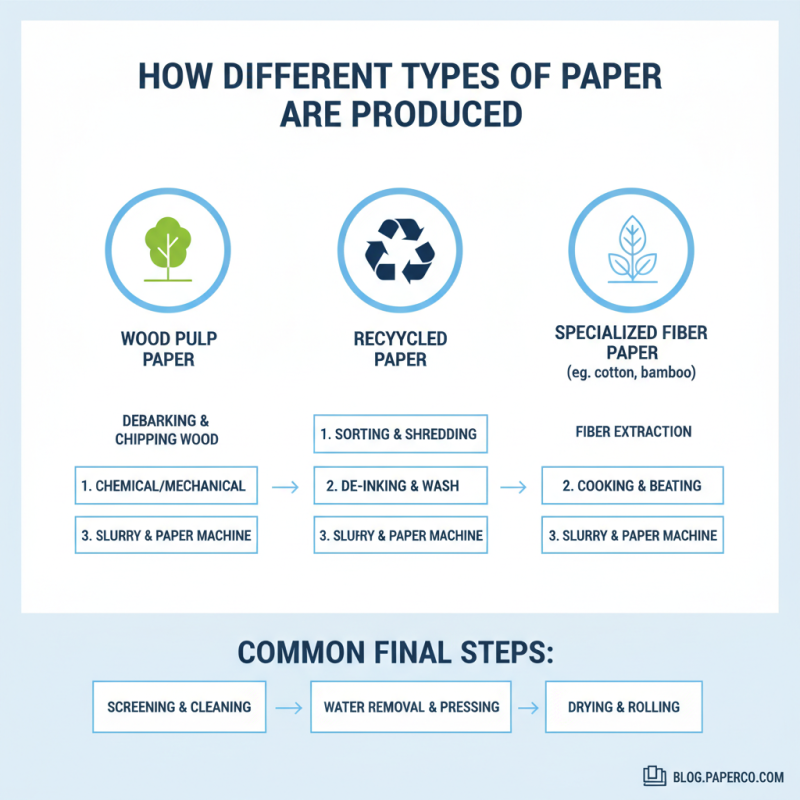
How Different Types of Paper Are Produced
Different types of paper are produced through distinct processes that vary in materials and machinery. Wood pulp, recycled paper, and specialized fibers are primary raw materials. The initial step involves breaking down these materials into a slurry. This mixture is fed into the paper machine, where it undergoes screening and cleaning.
For instance, newsprint is created from low-quality wood pulp, producing a lightweight paper. In contrast, high-quality papers, like those used for printing photographs, require more refined pulping processes and additional treatments. The paper machine shapes this slurry into sheets and removes excess water.
Each type of paper has unique characteristics, depending on the manufacturing method. Specialty papers may include additives for texture or brightness. Challenges arise in maintaining consistent quality, which can vary due to factors like raw material quality and machine precision. It’s a continuous learning process for manufacturers to optimize these conditions for better output.
Maintenance and Efficiency of Paper Machines
In the paper industry, maintenance and efficiency of paper machines are crucial for productivity. Regular maintenance ensures optimal performance and prevents costly downtime. Industry data suggests that unplanned maintenance can cost companies up to 20% of their annual revenue. Paper machines require routine inspections, lubrication, and adjustments to maintain their intricate systems.
Efficiency is another key factor. The average paper machine operates at around 70% efficiency. However, leading manufacturers achieve as high as 90% efficiency through advanced monitoring systems and real-time data analytics. Implementing predictive maintenance can improve machine longevity and reduce waste. A 2022 report indicated that companies employing these strategies saw a 15% increase in output.
Despite the technological advancements, challenges remain. Scheduling maintenance without interrupting production is complex. Not all operators have the training necessary for advanced machinery. This skills gap can lead to overlooked maintenance tasks. Even with systems in place, human error remains a risk. Addressing these issues is vital for continuous improvement in the industry.