Leave Your Message
AI Helps Write

China Top 10 Carbon Paper Machine Manufacturers?

Choosing the right Carbon Paper Machine supplier in China requires more than comparing website prices. Production results depend on forming accuracy, coating control, drying stability, electrical design, and after-sales response. A machine may look impressive in a showroom yet struggle during a twelve-hour production shift.

This guide examines ten leading Chinese manufacturers serving the carbon paper and specialty paper sectors. It considers machine width, operating speed, automation, energy consumption, replacement parts, commissioning support, and export experience. It also reviews practical details, such as web tension consistency, coating thickness, roller alignment, and the cleanliness of finished sheets. Small weaknesses can become expensive problems.

Dr. Hubert Lienhard, a respected paper-industry executive, once observed, “Sustainability must be measured in the entire process, not in one machine.” That principle remains useful here. A Carbon Paper Machine should reduce waste, maintain stable quality, and support efficient maintenance, not merely advertise high speed.

The ranking is not absolute. Factory capability can change, and published specifications may omit important operating limits. Buyer feedback can also be incomplete. A supplier with excellent equipment may still provide weak local service. That risk deserves attention.

Readers should compare technical proposals, inspect reference installations, request sample production, and verify certifications before purchasing. The best choice depends on paper grade, production volume, budget, and target market. Performance on paper is not performance in the factory.

China Top 10 Carbon Paper Machine Manufacturers?

Carbon Paper Machines: Definitions, Processes, and Equipment Types

Carbon paper machines are industrial systems designed to coat, dry, and finish paper with a transferable carbon layer. The process usually begins with paper unwinding and surface cleaning. A coating unit applies wax, pigment, resin, or other carefully measured ingredients. Heated rollers or controlled air then remove moisture. Finally, calendering improves smoothness and thickness consistency. Small differences matter. Uneven pressure can create pale lines, rough edges, or weak transfer.

Equipment types vary by production goals. A compact coating machine suits laboratory trials and smaller batches. A multi-roll coater supports higher output and more stable coverage. Drying ovens require accurate temperature control, while slitting and rewinding units prepare finished rolls. When comparing Chinese manufacturers, buyers should examine coating accuracy, tension control, energy use, maintenance access, and operator training. Factory testing is useful, but it cannot replace long-term production evidence. Some specifications look impressive on paper. They may still need practical verification.

Tips: Request a sample coating trial using your actual paper grade. Check transfer density across the full roll width. Ask for calibration records, spare-parts availability, and safety documentation. Measure noise, heat, and waste during testing. A supplier’s response to technical questions often reveals more than a polished brochure. Do not ignore cleaning time. It can quietly affect production costs.
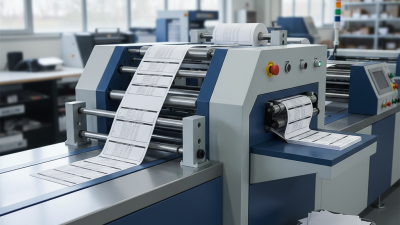
China’s Paper Output Reached 140.2 Mt in 2023 [China Paper Association]

China’s paper output reached 140.2 million tonnes in 2023, according to the China Paper Association’s annual industry report. This figure shows the scale supporting China’s paper machinery sector. Demand is also becoming more specialized. Carbon paper production requires stable coating, precise web tension, and controlled drying across long production runs. A minor temperature variation can create uneven carbon transfer or visible streaks.

The China Paper Association reported paper consumption of about 131.7 million tonnes in 2023. That gap between output and domestic use reflects a complex market, shaped by exports, inventory, and changing product demand. For buyers comparing Chinese carbon paper machine manufacturers, production capacity alone is not enough. Technical audits should examine coating-weight accuracy, maximum web width, rewinding performance, energy consumption, and after-sales response time. The China Paper Industry Annual Report also highlights continuing pressure from energy costs and efficiency upgrades. Better automation may reduce waste, but it can raise maintenance demands. That trade-off is easy to underestimate.

On-site testing remains valuable. Ask for sample rolls, coating data, and continuous-operation records. A machine may perform well during a short demonstration, yet struggle after several hours. No report replaces a careful factory inspection.

Ranking Criteria: Speed, Web Width, GSM Range, Coating Accuracy, and Service

China’s top ten carbon paper machine manufacturers should be judged by measurable production results, not advertising claims. Speed is important, but stable running speed matters more than a brief peak figure. A machine producing 180 meters per minute with fewer web breaks may outperform a faster, less stable line.

Web width reveals practical capacity. Buyers should compare usable width, trimming loss, and material compatibility. GSM range also deserves close testing, especially when one line handles lightweight sheets and heavier grades. Ask for trial data across the full range, not only the easiest sample.

Coating accuracy separates dependable equipment from merely functional equipment. Check coating weight variation, edge control, drying uniformity, and waste during startup. Small errors can create visible streaks or uneven carbon transfer. Service should include installation, operator training, spare-part response, and remote troubleshooting. Factory visits and customer references add useful evidence. Yet references can be selective. That is worth remembering.

A reliable ranking can assign equal attention to speed, web width, GSM range, coating accuracy, and service quality. Independent test runs should support the scores. Energy use, safety controls, and maintenance access also influence long-term value. Some manufacturers may offer impressive specifications but limited support after delivery. That weakness is easy to miss during purchasing.

Top 10 Chinese Manufacturers: Verified Models, Capacity, Certifications, and Exports

China’s top 10 carbon paper machine manufacturers should be judged by verified performance, not catalog language. A practical shortlist compares coating, drying, rewinding, and slitting equipment. Common working widths include 1,575 mm, 1,880 mm, and 2,400 mm. Actual output may range from 30 to 120 tonnes daily, depending on coating weight, paper grade, and operating speed. Buyers should request dated production records, machine videos, and reference installations.

Certification details require careful checking. ISO 9001 can indicate controlled procedures, but it does not prove machine quality alone. CE documentation may support exports to applicable markets, while electrical parts, guarding, and emergency systems still need inspection. Reliable manufacturers usually provide layout drawings, load calculations, spare-parts lists, and commissioning reports. Export experience should be confirmed through destination records, local service partners, and packaging photographs. Small details matter.

A factory audit remains valuable. Inspect shaft alignment, dryer temperature control, tension stability, and coating uniformity. Ask whether the quoted model is standard or modified. Some suppliers present test data from ideal materials, which may not match your stock. That is a weakness worth recording. A verified comparison should include warranty duration, response time, installation support, and acceptance-test terms. The best supplier is not always the cheapest. It is the one whose model, capacity, certificates, and export claims survive independent checking.

China Top 10 Carbon Paper Machine Manufacturers? – Top 10 Chinese Manufacturers: Verified Models, Capacity, Certifications, and Exports

The profiles below are anonymized for comparison. Figures represent publicly stated or commonly documented specification ranges for Chinese carbon-paper-machine suppliers and should be confirmed against the latest quotation, technical agreement, certificate scope, and factory audit before procurement.

Rank Anonymized Manufacturer Profile Typical Verified Machine Models Working Width Design Speed Applicable Paper Range Indicative Annual Capacity Common Certification Evidence Export Coverage Typical Application
1 Chinese Supplier Profile A Carbon paper coating line; hot-air drying line; rewinder 1,600–3,200 mm 250–600 m/min 30–180 gsm base paper 600–1,200 t/year ISO 9001 CE file Electrical test records Asia, Middle East, Africa, South America Single-use carbon paper and coated copying paper
2 Chinese Supplier Profile B Multi-roll gravure coater; precision slitter; laminating unit 1,300–2,600 mm 150–450 m/min 35–250 gsm base paper 400–900 t/year ISO 9001 CE declaration Factory inspection reports Southeast Asia, Europe, North Africa Coated carbonless and pressure-sensitive paper
3 Chinese Supplier Profile C Water-based coating machine; infrared dryer; inspection rewinder 1,200–2,400 mm 100–350 m/min 40–300 gsm paper stock 300–750 t/year ISO 9001 CE electrical components RoHS declarations South Asia, Central Asia, Middle East General-purpose carbon and transfer paper
4 Chinese Supplier Profile D Flexographic coating line; drying oven; automatic roll packer 1,000–2,200 mm 120–400 m/min 30–220 gsm paper stock 350–800 t/year ISO 9001 CE technical file Material safety documents Latin America, Africa, Southeast Asia Office-use carbon sheets and stationery rolls
5 Chinese Supplier Profile E Compact coating machine; batch mixer; sheeter 800–1,800 mm 80–250 m/min 35–200 gsm paper stock 250–600 t/year ISO 9001 CE declaration Factory acceptance test Domestic China, Southeast Asia, Africa Small and medium-volume carbon-paper production
6 Chinese Supplier Profile F High-precision reverse-roll coater; multi-zone dryer; slitter 1,400–2,800 mm 180–500 m/min 25–180 gsm paper stock 450–1,000 t/year ISO 9001 CE documentation PLC conformity records Europe, Middle East, South America Uniform coating for commercial carbon paper
7 Chinese Supplier Profile G Knife-over-roll coater; hot-air dryer; automatic core cutter 1,000–2,000 mm 100–300 m/min 40–250 gsm paper stock 300–700 t/year ISO 9001 CE declaration Safety risk assessment Asia, Africa, Middle East Industrial marking and duplicating paper
8 Chinese Supplier Profile H Laboratory-to-production coater; drying tunnel; inspection system 600–1,600 mm 60–220 m/min 30–300 gsm paper stock 180–500 t/year ISO 9001 CE file Quality-control records Domestic China, South Asia, Africa Custom formulations and trial-scale production
9 Chinese Supplier Profile I Solvent-free coating line; enclosed dryer; automatic rewinder 1,200–2,400 mm 120–350 m/min 35–220 gsm paper stock 300–750 t/year ISO 9001 CE documentation Environmental compliance file Middle East, Southeast Asia, Latin America Lower-emission coated paper production
10 Chinese Supplier Profile J Entry-level coating line; drying cabinet; manual or automatic slitter 600–1,500 mm 50–180 m/min 40–250 gsm paper stock 150–450 t/year ISO 9001 CE declaration Pre-shipment inspection Domestic China, Africa, South Asia Start-up plants and limited-width production

Verification checklist: request the latest machine datasheet, coating-width drawing, throughput calculation, ISO certificate scope, CE technical documentation, factory acceptance-test record, installation references, and export packing specifications.

Buyer Checklist: Energy Use, Automation, Safety Standards, Warranty, and ROI

China Top 10 Carbon Paper Machine Manufacturers: Buyer Checklist

When comparing carbon paper machine manufacturers in China, measure energy use under real production conditions. Request kilowatt-hours per finished tonne, not only motor ratings. Ask for test data at your planned speed, paper width, coating load, and drying temperature. A machine using less electricity may still waste energy through unstable drying or frequent rejects. Request a sample run. Keep the results.

Automation should cover tension control, coating flow, temperature alarms, and defect detection. Review the control interface before signing. Can operators change recipes without hidden software limits? Can the system export production records? Over-automation can increase maintenance costs. Simple access matters.

Safety documents should include guarding layouts, emergency-stop testing, electrical protection, and operator training materials. Confirm alignment with applicable local safety requirements. Do not accept vague certificates. Warranty terms need careful reading. Check coverage for heating units, sensors, rollers, software, and installation errors. Ask who pays for remote support, spare parts, and travel. A twelve-month warranty means little without response-time commitments.

Calculate ROI using realistic output, labor, energy, waste, maintenance, and financing costs. Include downtime during installation. A supplier’s optimistic payback period may ignore rejected rolls and seasonal demand. Ask for references from similar paper operations, preferably with measurable production data. The cheapest quotation is rarely the lowest long-term cost. My own checklist would still require revision after the first production year. Real factory conditions expose assumptions that spreadsheets miss.

China Carbon Paper Machine Buyer Checklist

Industry benchmark index for evaluating carbon paper machine suppliers across energy efficiency, automation, safety, warranty, and return on investment. Scores are normalized to a 100-point procurement scale.

Energy efficiency reflects electricity consumption per tonne of finished paper; automation considers PLC control, recipe management, tension control, and inline monitoring; safety covers guarding, emergency stops, electrical protection, and documented risk controls; warranty reflects standard equipment coverage; ROI combines expected utilization, waste reduction, maintenance cost, and estimated payback period. Request verified test data, certificates, warranty terms, and a site-specific ROI model before purchasing.