The global paper industry is changing, but fiber quality remains a practical concern. A Refiner Machine influences bonding, drainage, formation, and final sheet strength. Its effect appears on the production floor, not only in technical brochures.
The Food and Agriculture Organization reported approximately 423 million tonnes of global paper and paperboard production in 2022. CEPI recorded about 79.5 million tonnes of European paper and board production in 2023. These figures show the market’s scale, while the International Energy Agency continues to identify pulp and paper as an energy-intensive industrial sector. Refining performance therefore affects both product consistency and operating costs. Small energy losses can become expensive across continuous production.
Martin A. Hubbe, a recognized paper-science expert, states, “The main purpose of refining is to develop the strength potential of papermaking fibers.” That principle still matters when buyers compare disc refiners, conical refiners, and advanced control systems. The best supplier is rarely defined by machine size alone. Plate life, motor efficiency, throughput stability, automation, spare-part access, and local service require equal attention. A shiny specification sheet can mislead. Real performance depends on furnish, fiber source, moisture, and mill discipline.
This guide examines leading Refiner Machine manufacturers for global buyers. It considers engineering experience, application support, energy management, and documented customer performance. Some rankings remain imperfect. Public data is inconsistent. Buyers should verify references, trial results, lifecycle costs, and regional support before signing a purchase agreement.
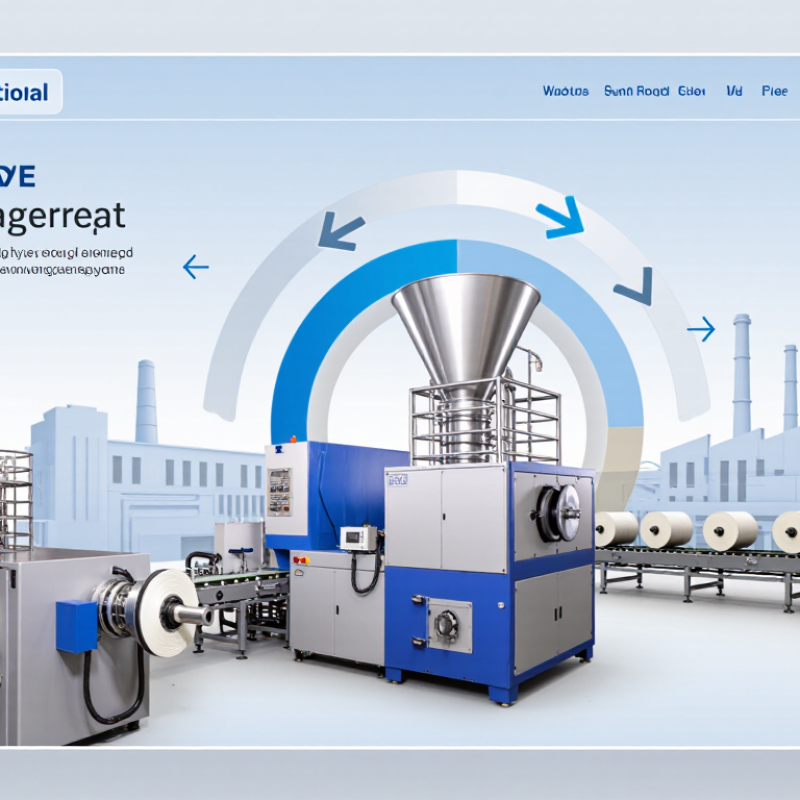
Refiner Machines: Types, Functions, and Industrial Applications
Refiner machines develop fiber strength, drainage behavior, and sheet formation in pulp production. Disc refiners suit continuous, high-throughput lines. Conical refiners provide controlled treatment where fiber development must remain precise. Laboratory refiners help engineers compare raw materials before full-scale investment. It matters.
The operating principle is mechanical fibrillation. Rotating plates expose fibers to compression, shear, and repeated impacts. Operators adjust plate gaps, rotor speed, consistency, and specific edge load. Excessive refining can shorten fibers and increase energy use. A lower motor load is not always better. It may indicate weak fiber development.
The Food and Agriculture Organization reported about 423 million tonnes of global paper and paperboard production in 2023. That scale increases pressure on mills to improve efficiency and product consistency. TAPPI technical guidance emphasizes testing freeness, tensile strength, tear, and formation after refining. These measurements connect machine settings with finished-sheet performance. In packaging plants, refiners support stronger lightweight board. Tissue mills usually seek softness and controlled drainage instead. Recycled-fiber operations face another problem: contaminants can accelerate plate wear and disturb loading. Not every specification is equally useful.
Global buyers should examine motor efficiency, plate-life data, automation capability, maintenance access, and documented trial results. Factory acceptance testing can compare energy consumption against refining performance. A supplier promising maximum output without fiber-quality evidence deserves careful review. Sometimes, the cheapest machine creates the most expensive process variation. Sources: FAO, Global Forest Products Facts and Figures 2023; TAPPI technical guidance on pulp refining and paper testing.

Disc, conical, and double-disc refiners are selected according to fiber type, target freeness, production scale, and refining intensity. The chart shows representative specific refining-energy levels commonly used for preliminary equipment planning.
Values are typical planning ranges expressed as midpoint estimates in kWh per tonne of dry fiber. Actual requirements vary with raw-material quality, consistency, freeness targets, plate design, and machine configuration.
When comparing refiner machine manufacturers, buyers should examine measured performance, not attractive brochures. FAO forestry statistics report that global paper and paperboard production exceeds 400 million tonnes annually. This scale makes refining stability commercially important. Ask each manufacturer for trial data using pulp similar to yours, including freeness, fiber length, shive content, throughput, and power consumption.
Energy deserves close attention. The International Energy Agency identifies the pulp and paper sector as a major industrial energy user, while industry guidance from TAPPI emphasizes process control and repeatable testing. Request energy figures in kWh per tonne, not only motor horsepower.
Check rotor balance, plate-life estimates, vibration limits, and the control system’s response to changing stock consistency. Small details matter.
A quiet bearing at the factory may behave differently beside a high-load production line.
Reliability also depends on service depth. ISO 9001 certification can support quality procedures, but it does not prove excellent field support. Review documented installation records, spare-part lead times, technician training, and warranty exclusions.
Ask for references from mills operating comparable capacities and raw materials. Independent inspection is useful.
Still, no scorecard is perfect; predicted maintenance intervals may look too optimistic. Buyers should challenge assumptions and calculate total ownership cost across five to ten years.
A manufacturer that explains limitations clearly may be more dependable than one promising effortless operation.
Refiner manufacturers now compete through energy control, fiber treatment, and after-sales support. Disc refiners suit continuous pulp production and stable fiber development. Conical refiners can provide gentle treatment for specialty grades. High-consistency systems reduce water demand before refining. However, technology claims need plant-level verification.
The Food and Agriculture Organization’s 2023 forest-products dataset reports roughly 420 million tonnes of global paper and paperboard production. This scale supports demand for reliable refining equipment across Asia, Europe, and the Americas. Market reach should include local technicians, spare-part warehouses, and commissioning teams. A low purchase price means little when a rotor waits weeks for replacement parts.
Technical comparisons should examine specific refining energy, throughput, plate life, vibration control, and automation quality. ISO 5264 testing methods can support consistent laboratory beating assessments before full-scale installation. Independent trials remain valuable, especially for recycled fiber with contaminants and inconsistent moisture. That detail is often underestimated.
Recent industry energy studies show refining may represent a significant share of a pulp line’s electricity use. The exact percentage varies by furnish, freeness targets, and process design. Buyers should request measured kilowatt-hours per tonne, not broad efficiency promises. No ranking is perfect. A manufacturer with advanced controls may still lack practical experience in a buyer’s local fiber conditions. Reference visits, maintenance records, and transparent performance guarantees deserve equal attention.
Top Refiner Machine Manufacturers for Global Buyers
Comparing a refiner starts with usable capacity, not the largest nameplate figure. Ask for tonnes per day at your actual furnish consistency, freeness, and target fiber development. CEPI Key Statistics 2023 reports 79.5 million tonnes of European paper and board production. That scale makes stable throughput essential, but capacity claims can mislead. Request trial data showing motor load, inlet consistency, reject rate, and production speed under comparable conditions.
Efficiency should be measured in specific energy, stated as kWh per tonne, rather than motor size alone. The U.S. Department of Energy’s Bandwidth Study on the Pulp and Paper Industry identifies process motors as important energy users. Check energy consumption at several refining intensities. A smaller plate gap may improve fiber development, yet it can increase power use and plate wear. Sometimes, lower energy is not better quality. This needs careful testing.
Quality data should include freeness, tensile strength, bulk, shive content, and sheet formation. Use consistent laboratory methods, such as ISO 5267 for drainage and ISO 5269 for handsheet preparation. Service deserves equal attention. Compare commissioning plans, spare-part availability, response times, remote diagnostics, and technician training. Ask for documented uptime from similar mills. One weakness remains common: buyers often compare machines before defining their quality target. That decision should be reversed.
| Comparison Dimension | Manufacturer Profile A High-Capacity Mill Systems |
Manufacturer Profile B Energy-Efficient Systems |
Manufacturer Profile C Specialty Fiber Applications |
Manufacturer Profile D Mid-Scale Production |
Manufacturer Profile E Custom Engineering |
|---|---|---|---|---|---|
| Typical Application | Pulp and paper mills with continuous high-volume production | Processes prioritizing low specific energy consumption | Recycled fiber, specialty pulp, and stock preparation | Small and medium-sized paper mills | Non-standard feedstock and engineered installations |
| Typical Throughput | 15–40 metric tons/hour | 8–30 metric tons/hour | 3–20 metric tons/hour | 1–12 metric tons/hour | 0.5–25 metric tons/hour |
| Common Motor Power Range | 250–1,000 kW | 160–800 kW | 90–500 kW | 45–250 kW | 30–800 kW, project-specific |
| Typical Refiner Plate Diameter | 36–42 in (900–1,070 mm) | 30–40 in (760–1,020 mm) | 24–36 in (610–915 mm) | 20–30 in (510–760 mm) | 20–42 in (510–1,070 mm) |
| Usual Feed Consistency | 3–5% | 2.5–5% | 2–6% | 2–5% | 2–8%, depending on material |
| Typical Specific Energy Range | 100–300 kWh per metric ton | 70–220 kWh per metric ton | 80–250 kWh per metric ton | 100–280 kWh per metric ton | Project-dependent; normally 70–350 kWh per metric ton |
| Gap and Load Control | Automatic hydraulic or electromechanical control | Automatic load-based control with energy monitoring | Automatic or manual control, depending on configuration | Manual standard; automatic option available | Configured to process conditions and control philosophy |
| Common Wear-Part Materials | High-chrome alloy or stainless steel refiner plates | Hardened alloy plates with replaceable segments | Stainless steel, hardened alloy, and application-specific patterns | Hardened alloy or stainless steel | Material selected according to fiber type and contamination level |
| Standard Safety Features | Guarding, vibration monitoring, overload protection, emergency stop | Interlocks, overload protection, temperature and vibration sensors | Mechanical guarding, motor protection, and inspection access controls | Basic guarding, emergency stop, and motor protection | Safety system designed for local regulations and plant standards |
| Quality Documentation Typically Available | Material certificates, factory test records, manuals, inspection reports | Performance data, electrical drawings, test records, maintenance manuals | Component certificates, operating instructions, and process test results | General arrangement drawings, manuals, and basic inspection records | Full project documentation, drawings, calculations, and commissioning records |
| Common Compliance Options | CE marking and ISO 9001 quality systems commonly available | CE marking, ISO 9001, and region-specific electrical compliance | CE marking and customer-specific inspection requirements | CE marking and standard industrial quality documentation | Compliance package tailored to destination-country regulations |
| Recommended Service Model | Regional field service and planned maintenance contracts | Remote diagnostics, energy audits, and service agreements | Process trials, plate selection, and application support | Distributor support and scheduled spare-parts supply | Engineering, installation supervision, commissioning, and operator training |
| Best Fit for Global Buyers | Large mills requiring high uptime and continuous operation | Plants focused on energy reduction and operating-cost control | Buyers needing customized refining patterns or recycled-fiber processing | Buyers seeking practical capacity at moderate capital cost | Projects requiring integration with existing production lines |
| Key Questions Before Purchase | Can the supplier verify capacity, uptime, and local service coverage? | Is specific energy measured under the buyer’s actual furnish conditions? | Are plate patterns and wear materials matched to the fiber furnish? | Are spare parts, installation support, and technical training included? | Are interface requirements, performance guarantees, and responsibilities clearly defined? |
| Note: The capacity, motor-power, consistency, and specific-energy figures represent commonly published industrial ranges for disc refiners and related stock-preparation equipment. Actual performance depends on fiber furnish, freeness, plate design, feed consistency, operating speed, and process conditions. Buyers should request a process test, guaranteed performance data, reference installations, and a detailed after-sales service plan before placing an order. | |||||
Global buyers should assess compliance before comparing machine prices. Ask manufacturers for material certificates, electrical documents, risk assessments, and test records. These files should match the destination country’s safety requirements. Confirm the machine’s voltage, frequency, guarding, emergency stops, and control-system language. A polished brochure is not proof of compliance.
Request a factory acceptance test before shipment. During the test, inspect vibration, temperature, noise, output consistency, and cleaning access. Record the results in a signed protocol. Installation also needs practical planning. The buyer should prepare foundations, lifting equipment, ventilation, water, power, and trained operators. Clear drawings matter. A small error in floor loading can delay commissioning for weeks. We have seen projects fail because utility limits were discussed too late.
After-sales support should be measurable, not merely promised. Confirm remote troubleshooting hours, technician response times, spare-parts availability, warranty coverage, and maintenance training. Ask for illustrated manuals and a recommended service schedule. Keep critical parts locally when shipping routes are uncertain. One honest concern remains: supplier checklists can miss site-specific risks. Buyers should review them with local engineers and operators. Installation records, training attendance, and service reports create useful evidence for future audits. Good support begins before delivery and continues through the machine’s working life.