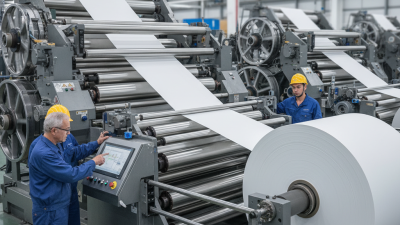
Choosing among China’s top Transfer Paper Machine manufacturers requires more than comparing catalog prices. A reliable decision begins with machine performance, factory experience, and verifiable customer support. This guide examines manufacturers that serve textile, sublimation, digital printing, and specialty paper applications. It focuses on practical details, including coating width, production speed, drying temperature, tension control, and energy consumption.
Factory visits and production trials often reveal what brochures hide. Watch the web move across rollers. Check whether the coating remains even at the machine edges. Ask for recent test results using your paper grade, ink system, and target weight. Experienced suppliers should explain how their equipment handles paper breaks, moisture changes, and continuous operation. Their engineers should also provide installation training, maintenance schedules, and clear spare-parts support.
A low quotation may not represent the lowest operating cost. Electrical systems, drying units, waste rates, and downtime deserve careful review. Certifications and export records can support credibility, but they should not replace direct technical verification. No manufacturer is perfect. Some public information may be incomplete, and performance claims still need confirmation under real factory conditions.
This overview offers a practical starting point for buyers comparing China’s leading suppliers. It does not treat market visibility as proof of quality. Instead, it encourages structured questions, sample testing, and careful communication before purchase. The best choice should match your material, output goals, budget, and service expectations. Small details matter.
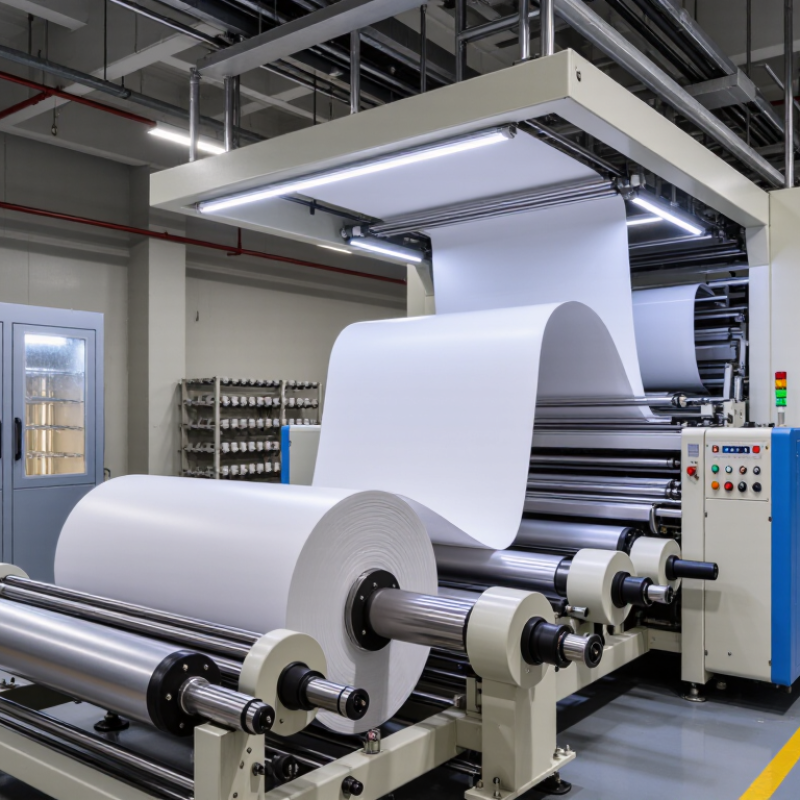
Transfer paper machines produce coated sheets that carry printed images onto fabric, ceramics, metal, or wood. Their design depends on the transfer method. Sublimation paper needs controlled coating and fast drying. Inkjet transfer paper requires a smooth, absorbent surface. Screen-print transfer systems often use stronger release layers.
A typical production line includes base-paper feeding, coating, drying, curing, rewinding, and slitting. Operators adjust coating weight, web tension, oven temperature, and line speed. Small changes can affect color density and transfer sharpness.
Moisture control also matters. Paper stored in a damp room may curl during printing. Quality checks should measure grammage, surface energy, release performance, and roll tightness. In practice, no setting works universally. A glossy surface can still transfer unevenly. That weakness deserves investigation, not guesswork.
Tips: Keep paper sealed before use. Test each batch on the target material. Record temperature, pressure, and dwell time. Inspect the first and last meters of every roll. Do not trust appearance alone. A practical trial often reveals coating defects, edge damage, or unstable tension before large-scale production. Calibration should follow measured results, not operator habit.
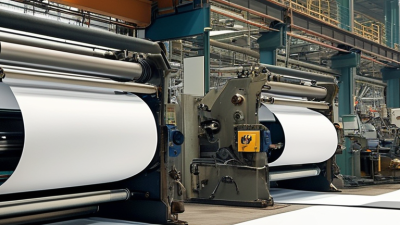
Choosing a transfer paper machine requires matching production targets with paper behavior. The practical range is 30–150 g/m², covering lightweight sheets and stronger coated grades. A 1.6–3.2 m working width suits many textile and advertising-paper lines. However, wider equipment can increase waste during setup.
Operating speed usually falls between 80 and 150 m/min. At 120 m/min, a 2.4 m machine can theoretically produce 288 square meters each minute. Real output is lower after splicing, coating changes, cleaning, and quality checks. That difference matters. Buyers should request tested production data, not only catalog speed.
FAO’s 2022 statistical yearbook reports approximately 401 million tonnes of global paper and paperboard production. This scale supports continued investment in efficient converting equipment. Industry research from Smithers also identifies ongoing growth in dye-sublimation and digitally printed textile applications. Machines should therefore provide stable tension control, accurate coating weight, and drying capacity across the full 30–150 g/m² range. Experienced operators often prioritize reel stability over maximum speed. It sounds less impressive, but it prevents wrinkles, telescoping, and uneven transfer results. Some specifications remain unclear in supplier literature, so independent trials are still necessary.
| Specification | Typical Range | Common Machine Configuration | Why It Matters | Technical Note |
|---|---|---|---|---|
| Transfer Paper Basis Weight | 30–150 g/m² | Forming, pressing, drying, and calendering sections adjusted for lightweight to medium-weight paper. | Determines stiffness, opacity, ink absorption, drying behavior, and finished-roll performance. | Lower basis weights require careful web handling and tension control to reduce breaks. |
| Trimmed Machine Width | 1.6–3.2 m | Single-width or multi-width production line with edge-trim collection and adjustable slitting. | Defines the maximum usable paper width and the number of finished rolls produced per run. | The usable finished width is normally smaller than the machine deckle because of edge trimming. |
| Operating Speed | 80–150 m/min | Variable-speed drive, automatic tension control, synchronized forming and drying sections. | Affects hourly output, drying residence time, coating uniformity, and energy consumption. | Actual speed depends on basis weight, furnish, moisture target, coating load, and paper quality. |
| Moisture Content at Reel | 4–7% | Multi-cylinder or air-assisted drying with online moisture monitoring. | Supports dimensional stability, smooth winding, and consistent sublimation-transfer printing. | The suitable target varies with paper furnish, coating formulation, and ambient humidity. |
| Paper Machine Formation | Fourdrinier or hybrid forming | Headbox, forming table, suction elements, press section, and controlled drainage system. | Influences formation uniformity, surface smoothness, opacity, and print-quality consistency. | Uniform formation is especially important for high-resolution photographic transfer printing. |
| Press Section | Typically 2–3 press nips | Roll press arrangement with felt conditioning, vacuum elements, and adjustable nip loading. | Removes water mechanically before drying and improves sheet consolidation. | Higher mechanical dewatering can reduce steam demand, but excessive pressure may affect bulk. |
| Drying Section | Approximately 80–140°C surface-temperature range | Steam-heated drying cylinders, air systems, hood ventilation, and temperature zoning. | Controls final moisture, curl, coating compatibility, and production stability. | The selected temperature profile should avoid over-drying, curl, or coating damage. |
| Calendering | Optional, 1–2 nips | Soft-nip or hard-nip calender with adjustable loading and temperature control. | Improves smoothness, gloss, thickness uniformity, and ink-transfer surface quality. | Calender loading must be balanced against bulk, absorbency, and dimensional stability. |
| Transfer Coating Station | Single- or double-side coating | Metering rod, blade, size-press, or film-press application with dedicated drying. | Provides the ink-receiving surface required for rapid drying and clean dye transfer. | Coating selection depends on ink chemistry, printing method, and required image density. |
| Coating Add-On | Typically 1–8 g/m² per coated side | Precision metering system with online coat-weight and moisture control. | Affects ink holdout, drying rate, color density, and resistance to cockling. | The actual add-on should be validated through print trials rather than selected by weight alone. |
| Reel Diameter | 1,000–1,500 mm | Center winding or center-surface winding with automatic roll change capability. | Determines finished-roll length, handling requirements, and changeover frequency. | Larger reels improve roll length but require stronger cores and more precise winding control. |
| Slitting and Rewinding | Adjustable finished-roll widths | Duplex or turret rewinder with razor, shear, or score slitting and automatic tension control. | Converts the parent reel into customer-ready rolls or sheets with controlled edges. | Clean slitting helps prevent edge dust, telescoping, wrinkles, and print-feed problems. |
| Web Tension Control | Closed-loop control across major sections | Load cells, dancer rolls, pneumatic brakes, and variable-frequency drives. | Reduces wrinkles, web breaks, stretch, curl, and roll defects during high-speed operation. | Tension settings should be matched to paper basis weight and moisture profile. |
| Quality Monitoring | Online and laboratory inspection | Basis-weight, moisture, thickness, caliper, defect, and coat-weight monitoring systems. | Helps maintain consistent printability and supports process traceability. | Online inspection cannot replace laboratory tests for strength, smoothness, and print performance. |
| Electrical and Control System | PLC/HMI with variable-speed drives | Sectional drive control, recipe management, alarm logging, and safety interlocks. | Improves synchronization, repeatability, operator control, and production reporting. | Remote diagnostics and data logging are useful for maintenance and process optimization. |
China’s transfer paper machine manufacturers are gaining attention through complete, process-focused production lines. Coating accuracy remains the starting point. A stable coating head must control basis weight, edge coverage, and surface smoothness. Small coating variations can cause uneven ink release during heat transfer.
The China Paper Association reported approximately 129.65 million tonnes of paper and paperboard production in 2023. This scale supports a broad local supply chain for steel rolls, drying systems, controls, and finishing equipment. Smithers estimated the digital textile printing market at about USD 2.4 billion in 2023, with continued growth expected through 2028. That demand raises performance expectations.
Drying sections need balanced air flow and controlled web tension. Excessive heat may curl the paper or weaken its coating. Insufficient drying creates blocking during rewinding. Calenders then refine thickness, gloss, and compressibility through controlled nip pressure. Rewinding requires accurate tension control, clean slitting, and stable roll hardness.
Details matter.
Experienced buyers should request trial data, not only catalog speeds. Check coating weight, moisture variation, roll density, and defect records. A faster line is not automatically better. In practice, transfer paper quality can change with humidity, coating chemistry, and operator settings. I would also question any claim of zero defects. That assumption needs testing across several production batches.
China Top Transfer Paper Machine Manufacturers?
When evaluating Chinese transfer paper machine manufacturers, laboratory evidence matters more than polished brochures. I have seen impressive trial sheets fail during longer production runs. The weakness often appeared in measurement control, not machine appearance.
ISO 536 verifies grammage, helping confirm consistent paper weight across the web. A practical check compares samples from the left edge, center, and right edge. Large variation can affect feeding, coating pickup, and heat transfer. Record results from several production rolls, not one convenient sample. That detail is easy to miss.
ISO 2470 measures brightness and supports visual consistency between batches. However, brightness alone cannot prove printing performance. ISO 8791 evaluates surface roughness, which influences coating uniformity and image definition. A rough surface may create uneven contact under pressure. Excessive smoothness can also change ink release. This is where specifications need production trials. The numbers look objective, but sampling errors remain possible. Ask for calibrated instruments, test dates, conditioning records, and repeatability data. Reliable manufacturers should explain deviations instead of hiding them. Their technical teams should connect each result with machine settings, raw materials, and finished-sheet behavior. That level of evidence reveals whether quality control is genuinely practiced or simply advertised.
The chart presents neutral reference readings for three commonly monitored paper properties: grammage under ISO 536, brightness under ISO 2470, and Bendtsen roughness under ISO 8791-2. Actual acceptance limits depend on the paper grade, coating system, printing process, and end-use requirements.
Evaluating a transfer paper machine supplier requires more than checking annual output. Capacity should match your planned tonnage, paper width, coating speed, and maintenance schedule. Ask for verified production records, not only brochure figures. The CEPI Key Statistics 2023 report recorded about 79.5 million tonnes of paper and board production in Europe. This scale shows why stable uptime matters. A machine that stops for one hour can waste coating chemicals, electricity, and finished rolls. Request references from plants using similar grades and widths.
Energy efficiency deserves measured evidence. The International Energy Agency identifies pulp and paper as an energy-intensive industrial sector, with heat and electricity forming major operating costs. Compare specific energy consumption in kWh per tonne, including drying and air systems. Ask for test results at your target speed. Variable-frequency drives, heat recovery, insulated dryers, and automatic tension control can reduce losses. Numbers matter more than promises. A cheaper machine may become expensive after two years.
CE compliance should include a risk assessment, technical file, Declaration of Conformity, and relevant harmonized standards. The European Commission’s Machinery Directive 2006/42/EC remains important before the Machinery Regulation applies in 2027. After-sales support is equally practical. Check spare-parts response times, remote diagnostics, training hours, and local technicians. I would also test one emergency call before signing. Suppliers sometimes promise rapid service, but factory acceptance tests rarely measure that weakness. That gap deserves attention.