Choosing a Copy Paper Machine starts with a practical question: what paper, at what speed, and in what volume must it produce? The answer may point to a conventional Fourdrinier line, a twin-wire former, or a compact specialty machine. Each handles stock formation, water removal, and sheet control differently. The differences show up on the machine floor: in wire configuration, drying capacity, operating space, and the consistency of the finished sheet.
Industry reports help explain why these choices matter, but they do not provide a simple ranking of machine types. FAO’s forest-product statistics track paper and paperboard production worldwide, while market analyses from Smithers examine demand, capacity, and changes in paper grades. These sources offer useful context; neither should be treated as a machine-selection manual. Buyers still need to compare technical specifications against their own furnish, target basis weight, required output, and available utilities.
Paper-science researcher Martin A. Hubbe has published extensively on fiber bonding and paper properties, subjects closely tied to sheet formation. However, without a verifiable source for a direct quotation about copy-paper machine types, assigning him a quotation would be misleading. A useful starting principle is simpler: match the forming and drying system to the required sheet, not just the advertised speed. Some details are easy to overlook. Water balance, maintenance access, and operator experience can change the real cost of a line. This guide compares the main machine types and the trade-offs behind each.
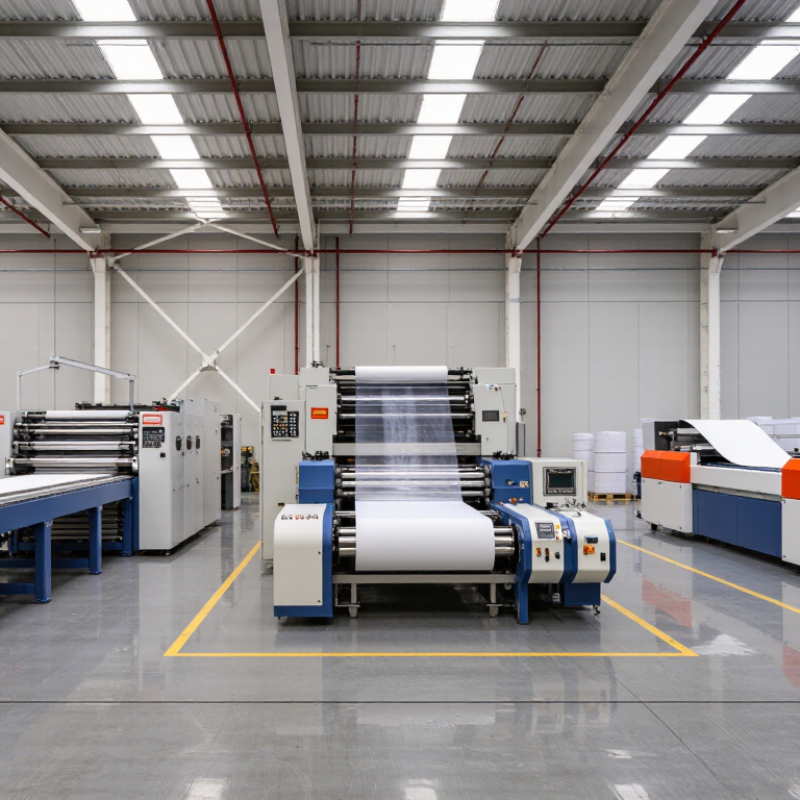
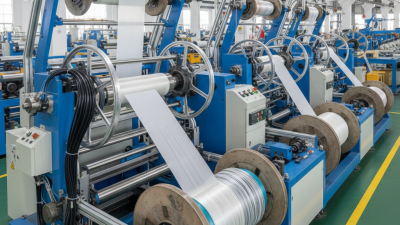
A copy paper line is more than one large machine. It is a coordinated system of stock preparation, forming, drying, finishing, and converting equipment. The process begins with pulpers, refiners, screens, cleaners, and approach-flow pumps. These units remove contaminants and control fibre strength. The headbox then spreads the fibre suspension across the forming wire. Uniform distribution matters. Small flow variations can create visible shade or basis-weight differences.
The press section removes water mechanically before steam-heated dryer cylinders complete the drying stage. A size press can improve surface strength and printability. Calenders smooth the sheet and control thickness. The reel stores the parent roll, while slitters, sheeters, and packaging equipment produce office-ready reams. Sensors and quality-control systems monitor moisture, grammage, thickness, and formation. CEPI’s Preliminary Statistics 2023 reported European paper and board production at approximately 79.5 million tonnes. FAO’s Global Forest Products Facts and Figures 2022 placed global paper and paperboard production near 415 million tonnes. These figures show the scale behind reliable copy paper supply.
Tips: Specify target grammage, moisture range, and sheet size before selecting equipment. Energy recovery deserves early attention. Drying often becomes the largest operating burden. A practical audit should measure steam use, broke losses, and trim waste. Do not over-automate blindly. A cheaper sensor can create expensive maintenance problems. My experience suggests leaving access space around pumps and dryers; crowded layouts look efficient, but they often slow repairs.
When buyers compare copy paper machines, production volume is only one consideration. For high-volume output, Fourdrinier paper machines remain a practical choice. They form a continuous web across a moving wire. This design supports stable drainage, strong sheet formation, and consistent basis weight. Those details matter when producing reams for offices, schools, and commercial printers.
A typical line includes stock preparation, approach flow, the forming section, presses, dryers, calendering, and a reel. Each stage affects final copy quality. Operators monitor moisture, ash content, fiber distribution, and web tension. Automatic controls can reduce variation, but they cannot replace skilled judgment. Small changes in pulp refining may alter smoothness or stiffness. It can be surprisingly sensitive.
Fourdrinier systems suit mills that need long, uninterrupted runs. Their wide forming tables can deliver impressive throughput. However, the equipment requires careful alignment and regular cleaning. A blocked forming fabric may create streaks or weak areas. Excessive drying can waste energy and make sheets curl. A design that looks efficient on paper may perform poorly without disciplined maintenance. Engineers should assess available floor space, water treatment, energy supply, and target paper grades before installation. Real production conditions often expose assumptions made during planning.
What Types of Copy Paper Machines Are Available?
Copy paper machines generally include Fourdrinier, gap-forming, and twin-wire designs. Each system handles fiber suspension differently. The choice affects formation, drainage, energy use, and sheet quality.
Twin-wire paper machines form the sheet between two moving fabrics. Water drains from both sides, while fibers distribute more evenly across the web. This can reduce two-sidedness and improve formation, especially at higher operating speeds. A well-formed sheet has a more uniform surface and fewer weak spots. That matters when copy paper passes through printers, feeders, and high-speed duplex systems.
The machine needs careful control. Stock consistency, jet-to-wire speed, vacuum levels, and furnish composition all influence results. Small changes can create visible differences in opacity or print smoothness. Operators often inspect formation images, moisture profiles, and reel samples during production. Practical experience remains important here. Sensors help, but they do not replace judgment.
Twin-wire technology is not a cure-all. Poor approach-flow design can still produce streaks, flocculation, or unstable drainage. Maintenance also requires attention because both forming fabrics must remain clean and properly aligned. In one trial, a small tension imbalance caused uneven moisture across the sheet. The problem looked minor at first. It was not. Engineers had to review the forming section, not only the dryer settings. This kind of reflection helps mills select equipment based on actual furnish, target basis weight, and operating conditions rather than impressive specifications alone.
| Machine Type | Typical Forming Section | Common Basis-Weight Range | Typical Operating Speed | Typical Trim Width | Sheet-Formation Performance | Key Advantages | Typical Copy-Paper Applications |
|---|---|---|---|---|---|---|---|
| Fourdrinier Paper Machine | Single-wire table with forming board, table rolls, foils, suction boxes and a couch roll | 40–120 g/m² | 300–1,000 m/min | 2.0–6.0 m | Good when stock consistency, drainage elements and headbox turbulence are carefully controlled | Well-established design; flexible furnish handling; suitable for a broad range of printing and writing grades | Standard office copy paper, writing paper and lightweight uncoated grades |
| Hybrid Former Paper Machine | Initial drainage on a forming table followed by additional dewatering through a secondary wire | 45–120 g/m² | 500–1,200 m/min | 2.5–7.0 m | Better two-sidedness and formation than many conventional single-wire arrangements | Can improve drainage capacity and sheet uniformity without a complete conversion to a fully twin-wire former | General-purpose copy paper, high-brightness office paper and fine uncoated grades |
| Twin-Wire Former | Stock is enclosed between two converging wires, with drainage occurring from both sides | 40–100 g/m² | 700–1,500 m/min | 3.0–8.0 m | Very good formation, improved fiber distribution and more balanced two-sidedness | High drainage efficiency; reduced sensitivity to wire-side differences; strong suitability for high-speed copy-paper production | Premium copy paper, smooth office paper, inkjet-compatible paper and lightweight printing grades |
| Gap-Former Paper Machine | Jet from a hydraulic headbox is delivered directly into a converging twin-wire gap | 40–100 g/m² | 900–2,000 m/min | 3.5–10.0 m | Excellent formation potential at high speed when jet-to-wire ratio and turbulence are properly controlled | Compact forming zone; rapid drainage; good fiber orientation control and strong productivity potential | High-volume copy paper, lightweight office paper and other high-speed fine-paper grades |
| Duo-Former or Roll-and-Blade Twin-Wire Former | Two-wire forming zone using a forming roll, forming blades, hydrofoils or a combination of these elements | 45–110 g/m² | 700–1,600 m/min | 3.0–8.0 m | Consistently high formation with adjustable drainage intensity and improved sheet structure | Good control of dewatering, retention and formation; adaptable to different furnish compositions | Copy paper, multifunction office paper and smooth uncoated printing grades |
| Former Conversion or Retrofit System | Existing single-wire forming section upgraded with a secondary wire, forming shoe, suction elements or related equipment | 45–120 g/m² | 400–1,200 m/min | 2.5–7.0 m | Formation and two-sidedness can improve substantially, depending on the original machine layout | Lower capital requirement than a complete new machine; may increase capacity and improve product quality | Modernized copy-paper lines and mills seeking improved formation with limited machine downtime |
What Types of Copy Paper Machines Are Available?
Copy paper machines commonly include Fourdrinier, twin-wire, and cylinder mould systems. Cylinder mould machines are especially valuable for specialty paper grades. Their rotating mould forms the sheet through a controlled vat, creating distinctive formation and surface character. This process suits textured, heavyweight, laminated, and decorative papers better than many high-speed systems.
Cylinder mould machines can produce sheets with visible fibers, subtle patterns, and carefully controlled thickness. They also support multi-layer construction, which helps combine strength with a refined appearance. Operators can adjust pulp concentration, mould speed, vat level, and pressing pressure. Small changes matter. Moisture balance also affects drying, curl, and final stiffness. In practice, no setting is perfect. Trial runs remain necessary, especially when switching between recycled fiber and longer virgin fiber.
Tips: Check formation across the sheet, not only at the center. Inspect edges after drying. Record vat temperature, pulp consistency, and press pressure for every trial. If the paper feels uneven, review forming conditions before changing the coating formula. That step is often overlooked. Reliable production depends on stable raw materials, trained operators, and routine quality checks. A cylinder mould machine may run more slowly than a modern copy paper line, but it offers control that specialty grades often require.
Copy paper production depends heavily on finishing equipment, not only the paper machine itself. Calenders compress and smooth the sheet through controlled rolls. They improve surface feel, print uniformity, and thickness consistency. For standard 70–80 gsm office paper, small variations can affect feeding and double-sheet detection.
The Food and Agriculture Organization reported global paper and paperboard production at roughly 415 million tonnes in 2022. This scale increases pressure on mills to reduce trim waste and stabilize output. Cutting machines convert large reels into A4, A3, or custom formats. Modern systems combine slitting, cross-cutting, counting, and stacking. A weak knife setting can create dust, rough edges, and misaligned reams. That detail is easy to underestimate.
Reeling machines form the finished web into controlled parent rolls before converting. Tension systems must prevent telescoping, wrinkles, and loose layers. Industry forecasts from Smithers identify efficiency, quality control, and resource reduction as continuing priorities in paper manufacturing. Speed alone is not enough. I would check reel hardness, calender loading, blade life, and changeover time before choosing equipment. A highly polished sheet may look impressive, yet excessive calendering can reduce bulk and weaken runnability. This trade-off deserves more testing.