2026 Best Cardboard Machine Buying Guide for Global Buyers
Buying a Cardboard Machine in 2026 requires more than comparing speed, price, and production photographs. Global buyers must examine board grades, flute profiles, sheet dimensions, glue systems, drying conditions, power standards, and after-sales support. A machine that performs well in a dry factory may struggle in a humid coastal warehouse. Small details matter. Ask for verified samples.
W. Edwards Deming, a leading authority on industrial quality management, said, “Quality comes not from inspection, but from the improvement of the production process.” This principle fits cardboard converting equipment closely. Reliable output depends on stable feeding, accurate scoring, controlled pressure, and disciplined maintenance. Buyers should request factory test videos, service records, spare-parts lists, and clear acceptance standards. Supplier experience with similar box styles also deserves careful attention.
This guide is designed for importers, packaging manufacturers, distributors, and expanding factories. It explains how to compare machine types, calculate total ownership cost, assess automation, and avoid attractive but incomplete quotations. A low purchase price can hide expensive downtime. Faster is not always better. Sometimes, a simpler Cardboard Machine produces more consistent boxes because operators understand it fully. That point is easy to overlook. Even experienced buyers can misjudge local skills, electricity quality, or future order changes. The strongest decision combines technical evidence, practical factory experience, and honest reflection about what the business can support today.
Cardboard Machine Types and Their Industrial Applications
2026 Best Cardboard Machine Buying Guide for Global Buyers
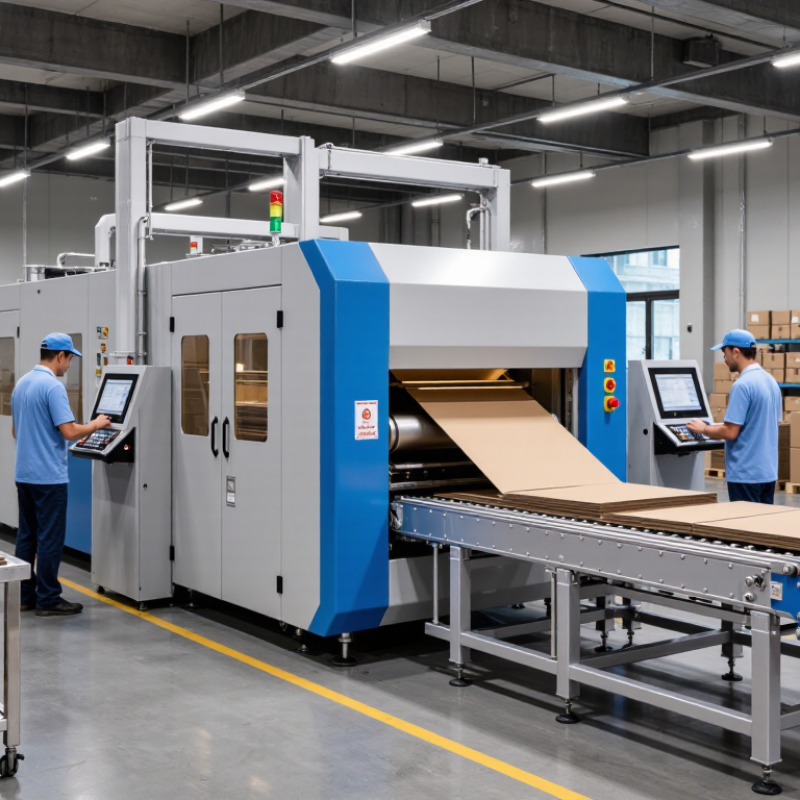
Cardboard machines serve different production stages, and their applications rarely overlap completely.
Corrugators join paper liners with fluted medium for shipping boxes, trays, and protective inserts.
Sheet cutters then divide large boards into accurate formats.
Flexographic folder-gluers print, crease, fold, and seal finished cartons at high speed.
Die-cutters handle complex shapes, including retail displays and produce boxes.
For heavy-duty packaging, laminators add paper, film, or printed layers to improve strength and appearance.
The market remains substantial.
FAO data recorded global paper and paperboard production above
400 million tonnes in 2022.
Smithers also identifies corrugated packaging as a major growth area, driven by e-commerce, food distribution, and transport protection.
Food plants often need washable surfaces and fast changeovers.
Appliance suppliers usually prioritize compression strength and larger sheet formats.
E-commerce converters may value short-run flexibility more than maximum speed.
Machine selection should match board grade, order size, labor skills, and local power standards.
In factory evaluations, I look closely at glue control, waste percentage, roller access, and maintenance records.
Small details matter. Dust matters too.
A fast machine with unstable feeding can increase waste and delay delivery.
Buyers should request verified output data, not only catalogue speed.
Energy use, spare-part access, operator training, and safety certification also deserve equal attention.
The difficult truth is that one machine rarely fits every plant.
Some specifications will need reconsideration after real production trials.
How Cardboard Machines Work: Core Processes and Components
How Cardboard Machines Work: Core Processes and Components
A cardboard machine converts paper rolls into firm sheets through heat, pressure, glue, and controlled movement. The process begins with a reel stand, which feeds liner paper and fluting paper at a steady speed. Preheaters soften the paper and reduce moisture differences. The single facer then shapes fluting paper between heated rollers. Adhesive bonds it to a liner. This creates corrugated board. A double facer adds another liner under heat and pressure. The finished web moves through slitter scorers, a cut-off knife, and a stacker. Each component needs accurate alignment.
Tips: Check the machine’s working width, speed range, flute profiles, power supply, and local service support. Ask for test samples using your own paper grades. Inspect glue lines, flute height, cut accuracy, and stack quality. Small details matter.
In real factories, performance rarely depends on speed alone. Paper moisture, workshop temperature, roller wear, and glue viscosity can change the result within hours. A fast machine may produce weak board if its heating zones are poorly balanced. Operators should monitor tension, steam pressure, waste levels, and edge alignment during every shift. Maintenance access also deserves serious attention. A convenient inspection door can save hours during cleaning. Some buying decisions still focus too heavily on maximum output. That can be a mistake. Reliable production is often slower, steadier, and easier to control.
Key Specifications for Comparing Cardboard Machines
When comparing cardboard machines, start with the board you actually produce. Check the usable width, sheet length, flute profile, and supported paper weight. A machine designed for 3-ply board may struggle with heavier 5-ply structures. Confirm the minimum and maximum board sizes, not only the advertised maximum. Small gaps matter.
Production speed deserves careful testing. Ask whether the stated speed applies to real orders or ideal laboratory conditions. Measure output per hour, setup time, waste rate, and changeover time. A slower machine with stable feeding may outperform a faster model during long production runs.
Check motor power, energy consumption, and compressed-air requirements. These costs quietly shape the purchase decision. Noise levels matter too, especially in enclosed workshops.
Control systems should record faults, production counts, and maintenance intervals. Operators need clear displays and practical access to rollers, belts, knives, and glue systems. Inspect emergency stops and guarding before discussing automation. Request sample boards made with your paper grades and moisture levels. Paper behavior changes with climate. It is easy to underestimate that issue. Ask for installation guidance, spare-part availability, training, and response times across your region. Warranty terms should define coverage clearly, including labor and transport. One imperfect detail often reveals the supplier’s reliability: vague technical drawings, missing tolerances, or inconsistent test data. Keep those questions in writing.
How to Select a Cardboard Machine for Your Production Needs
Selecting a cardboard machine starts with your orders, not the advertised maximum speed. Smithers’ 2024 market report valued global corrugated packaging at approximately US$205 billion in 2023. Demand is expanding, but every plant has different constraints. Record your weekly sheet sizes, flute profiles, board grades, box styles, and peak-hour volumes. Measure the real mix.
A machine rated at 15,000 sheets per hour may slow sharply during short runs and frequent changeovers. Ask for demonstrated output using your board, not showroom samples. FEFCO’s 2023 European statistics reported more than 48 billion square metres of corrugated production, showing the scale of competition and capacity pressure. Still, bigger is not always better. A wide-line machine can waste floor space, energy, and material when orders remain small. Check setup time, trim-loss controls, print registration, maintenance access, and operator training. Request three-year data for power use, spare parts, rejected sheets, and actual uptime. These figures reveal ownership cost more honestly than the purchase price.
I would also test service response before signing. Ask how quickly technicians can diagnose faults remotely and supply critical parts. Safety guarding and documented compliance must be verified for your operating region. A perfect production forecast is impossible. Leave capacity for growth, but do not pay for capacity your order book cannot support. Pilot trials matter. Include difficult board grades and the smallest planned batch, because those conditions expose weaknesses early.