How to Choose the Best Rewinder Machine for Your Business?
Choosing the right Rewinder Machine is crucial for any business in the packaging and printing industry. According to Martin Hughes, a leading expert in machinery optimization, "A reliable rewinder can drastically improve your workflow and efficiency." Selecting the best machine involves understanding your specific needs and the features available in the market.
Rewinder Machines enhance production efficiency, but many businesses struggle with their choices. It's essential to consider factors such as the size of your operations, the types of materials you use, and the production volume. A tailored approach leads to better outcomes. Many companies purchase machines without proper research, only to find they don't meet their requirements.
The world of Rewinder Machines is vast and can be confusing. Each model offers different speeds, widths, and functions. Reflecting on the right fit for your business is key. The wrong choice may lead to increased downtime and operational challenges. Take the time to evaluate your options carefully.
Understanding the Functionality of Rewinder Machines for Industrial Use
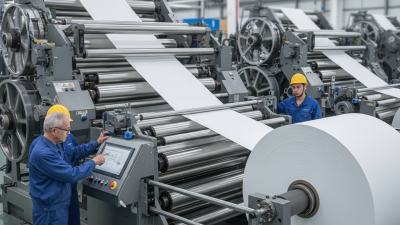
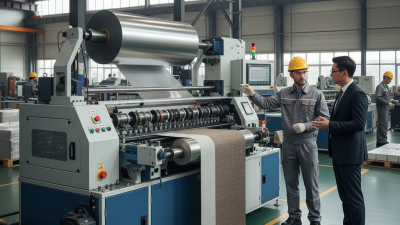
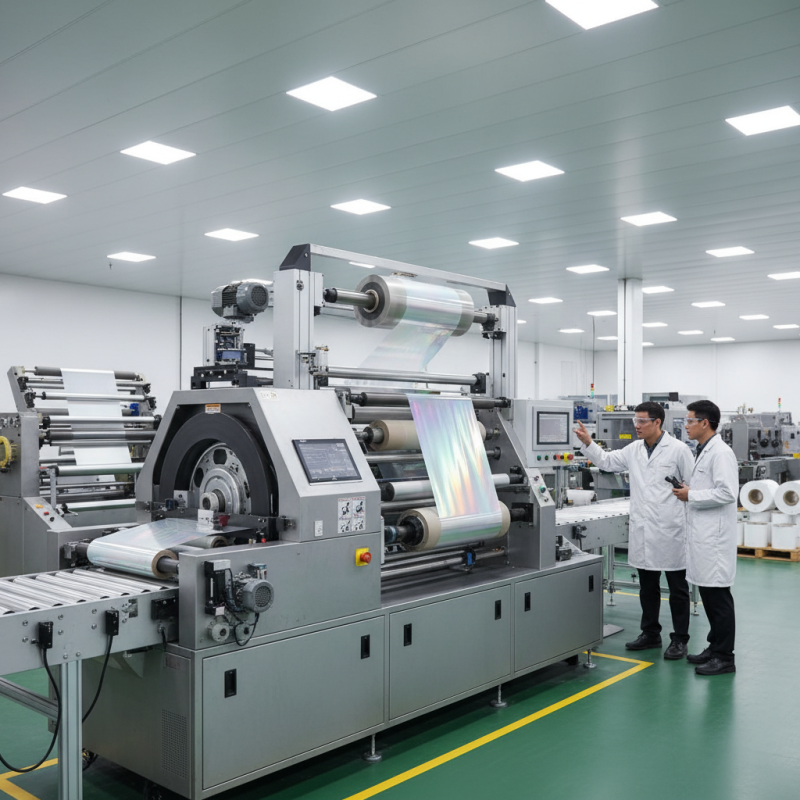
Rewinder machines are essential tools in many industrial settings. They are designed to manage and convert large rolls of material into smaller, more manageable sizes. Understanding how these machines work is crucial for effective use. Typically, rewinder machines feed the material and rewind it efficiently. This ensures uniformity and ease of handling.
Different types of rewinder machines exist, each suited to specific materials. For instance, films, foils, and paper may require different attention. Customizing settings for each material can be challenging. Operators must often adjust tension, speed, and alignment to achieve desired results. Over time, this process can lead to variable performance and quality issues.
The effectiveness of a rewinder machine heavily relies on operator experience. Skilled operators can identify subtle issues before they escalate. Mistakes may arise from inadequate training or hardware malfunctions. Regular maintenance is also vital. A neglected machine can produce subpar outcomes. Thus, the interplay of knowledge and machinery is pivotal for industrial productivity.
How to Choose the Best Rewinder Machine for Your Business?
| Feature |
Description |
Importance |
| Speed |
The rate at which the machine can rewind material, typically measured in meters per minute. |
High - Affects production efficiency. |
| Roll Width |
The maximum width of the material that can be rewound. |
Medium - Depends on product specifications. |
| Material Compatibility |
Types of materials the rewinder can handle (e.g., paper, film, nonwoven). |
High - Critical for operational needs. |
| Automation Level |
Degree to which the machine can operate automatically versus needing manual intervention. |
Medium - Impacts labor cost and efficiency. |
| Size and Footprint |
The overall dimensions of the rewinder, which affects space requirements. |
Medium - Important for facility layout. |
| Cost |
Initial purchase price and potential operational costs, including maintenance. |
High - Directly impacts ROI. |
| Warranty and Support |
Availability of warranties and quality of customer support. |
Medium - Essential for long-term reliability. |
Key Factors to Consider When Selecting a Rewinder Machine
Choosing the right rewinder machine for your business is crucial. There are several key factors to consider. First, evaluate the production volume. A high-demand environment may require a faster machine with greater capacity. This ensures efficient workflow and reduces bottlenecks.
Another important factor is the material type. Different materials require specific features in a rewinder. For example, delicate films need gentle handling. Sturdier materials can withstand more pressure. Make sure to match the machine to your material needs.
Tip: Keep your floor space in mind. Consider a compact model if space is limited.
Think also about the ease of operation. A user-friendly interface will save training time. If the machine is complicated, it can lead to errors.
Tip: Read user reviews on operational efficiency. Real-world experiences give valuable insights.
Maintenance is another factor. Regular upkeep can prolong machine life. Ensure that parts are easily accessible for servicing. This will minimize downtime during repairs.
Tip: Look for machines with good support from manufacturers. Reliable service can make a big difference.
Assessing Your Business Needs: Production Volume and Material Type
When selecting a rewinder machine, understanding your business needs is crucial. The production volume directly impacts the type of machine that suits you. For instance, if your operation runs at high volumes (over 10,000 units per week), you'll require a machine designed for speed and efficiency. The market analysis from Smithers Pira reports that companies with escalating production demands tend to prefer higher-speed models, often exceeding 300 meters per minute.
Material type also plays a significant role in your selection process. Different materials, such as paper, plastic, or metal, require specific rewinding capabilities. For example, a heavier material may need robust machinery to handle the added stress. According to the 2022 Flexographic Technical Association report, businesses often underestimate the importance of adapting their machines to the unique characteristics of materials. Improper matching can lead to inefficiencies and increased downtime.
Another aspect to consider is maintenance. High-performance machines usually require more upkeep. Regular maintenance must align with your operational schedule. Some manufacturers claim up to 20% downtime can be attributed to poor integration with existing production lines. It's wise to evaluate if your infrastructure supports a new rewinder before making a decision. This reflection is essential; ignoring it can lead to unforeseen challenges in the long run.
Evaluating Features: Speed, Precision, and Maintenance Requirements
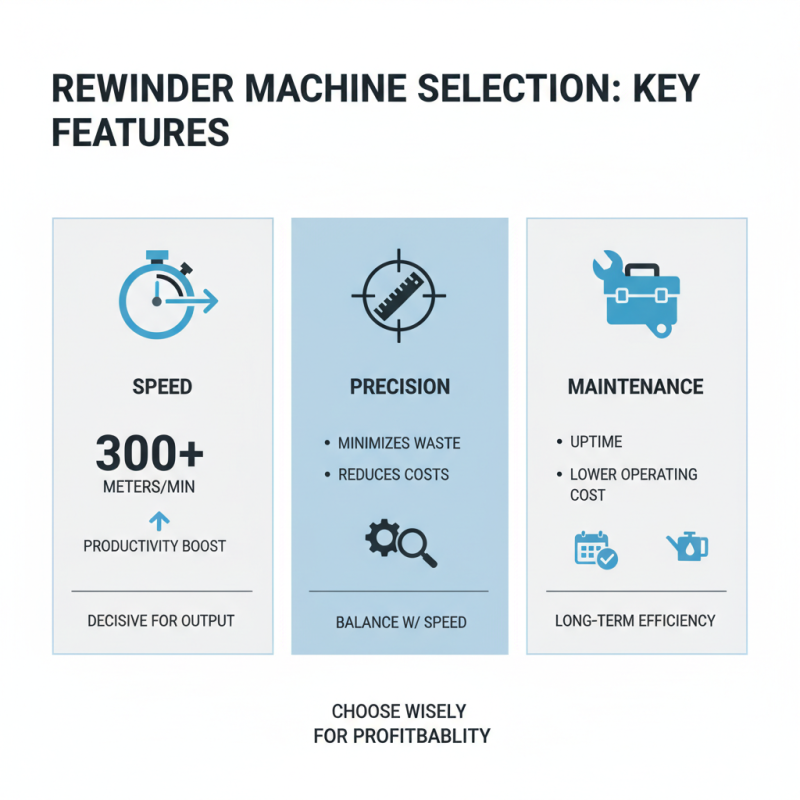
When selecting a rewinder machine for your business, it's crucial to focus on key features like speed, precision, and maintenance requirements. Speed is often a decisive factor in production. According to industry reports, machines with speeds of over 300 meters per minute can enhance productivity dramatically. However, faster isn’t always better. It’s essential to balance speed with accuracy. Precision matters because inaccuracies can lead to material waste and increased costs.
Maintenance is another critical consideration. Regular upkeep is vital for keeping machines running smoothly. Studies show that poorly maintained machines can lead to a 20% reduction in efficiency. It’s concerning that many businesses overlook this aspect, leading to unplanned downtimes. Understanding the maintenance demands of different models can aid in making an informed decision. Less frequent maintenance may seem appealing, but long-term reliability often needs more attention.
Many operators find the most efficient machines take time to learn. Initial setup may require effort and training. Emphasizing user-friendliness can help alleviate this issue. It’s worthwhile to assess both operator comfort and machine control systems before purchase. Balancing speed, precision, and maintenance will lead to better productivity and lower operational costs.
Comparing Different Brands and Models for Quality and Value
Choosing the right rewinder machine can greatly impact your production efficiency. Various brands and models offer different features, making the comparison process crucial. Look for machines that provide consistent winding, easy operation, and durability. A reliable rewinder should withstand high-speed operations without compromising quality.
When assessing models, consider factors such as material compatibility and the size of the rolls. Some machines excel in handling specific materials, while others are versatile. It's essential to read user reviews and case studies from businesses similar to yours. These insights provide a clearer picture of performance and potential issues.
Don’t forget about customer support and warranty terms. A machine might seem perfect, but lacking support can lead to downtime. Ultimately, balancing quality and value is key. Take your time to reflect on your specific needs and long-term goals.
Rewinder Machine Comparison: Quality vs. Value