Leave Your Message
AI Helps Write

How to Choose the Best Thermal Paper Machine for Your Business?

Choosing the right Thermal Paper Machine can significantly impact your business operations. With a variety of options available, it’s crucial to find a machine that meets your specific needs. Many businesses overlook the importance of quality and durability in thermal paper machines, which can lead to ongoing cost issues and inefficiencies.

Consider the volume of prints your business requires. Machines vary in speed and capacity. A lower-capacity machine might save initial costs but lead to delays if your print demands exceed its capabilities. The reliability of the machine also plays a vital role in your decision. Frequent breakdowns can disrupt your workflow and affect customer satisfaction.

It’s essential to research the brands and models available on the market. Some brands have built a reputation for quality and longevity. Reading user reviews and case studies can provide insights into the real-world performance of these machines. Ensuring your thermal paper machine aligns with your business goals is key to making a successful investment.
How to Choose the Best Thermal Paper Machine for Your Business?

Understanding Your Business Needs for Thermal Paper Machines

Choosing the right thermal paper machine begins with understanding your specific business needs. Are you a small retail shop or a large warehouse? The volume of paper you will use directly influences your choice of equipment. A busy café may require faster machines than a boutique store. Evaluate how often you print receipts or labels. This is crucial for selecting a machine that can keep pace with your demands.

Consider your budget carefully. It's easy to overspend on features you may not need. Investigate the cost of maintenance and replacement parts. Sometimes a cheaper machine can lead to higher long-term costs. Reflect on the type of thermal paper you will use. Not all machines are compatible with every kind of paper. Research this as a priority to avoid future problems.

Look into the available space in your establishment. Machines come in various sizes, and their footprint can affect workflow. When space is limited, compact models can be effective. Additionally, think about the training required for your staff. Some machines have a steeper learning curve than others. Evaluate how much time you can allocate to training. This can impact overall productivity.

How to Choose the Best Thermal Paper Machine for Your Business?

Feature Description Consideration
Speed Measured in sheets per minute, indicates how fast the machine prints. Assess your expected volume of printing to choose an adequate speed.
Print Quality Resolution of printed images, typically measured in DPI (dots per inch). Determine the required quality based on your business needs.
Size Compatibility Ability of the machine to accommodate different sizes of thermal paper rolls. Ensure it fits the sizes your business requires.
Durability Longevity and robustness of the machine in a working environment. Look for machines with good reviews on durability.
Portability Ease of moving the machine if needed, often important in retail scenarios. Consider if mobility will be a factor in your business setup.
Cost Initial investment and ongoing costs of maintenance and supplies. Budget constraints and overall cost-effectiveness should be evaluated.
Technical Support Availability of customer support and technical assistance from the manufacturer. Select brands with reputable support services if issues arise.

Key Features to Consider When Selecting a Thermal Paper Machine

Choosing the right thermal paper machine is crucial for your business operations. There are several key features to consider. First, assess the printing speed. A machine that offers 200 mm/sec might meet the needs of a high-volume environment. Performance directly affects productivity. You want to ensure it meets your daily demands without frequent downtime.

Next, consider the paper width capacity. Machines that accommodate widths between 80 mm and 112 mm are versatile for various applications. This adaptability is essential in retail and hospitality. High-quality print resolution is another feature. A resolution of at least 203 DPI ensures clear, legible prints, enhancing customer satisfaction.

**Tips:** Evaluate your company’s growth potential. A machine with expandable features might save costs long-term. Additionally, invest in energy-efficient models. Reports indicate an increase in energy-conscious practices among businesses. Investing in such technology can reduce operational costs. Don't overlook maintenance needs; regular upkeep prolongs the machine's life. Always review the user feedback before making a purchase. Insights from other users can reveal strengths and weaknesses you might miss.

Key Features to Consider When Selecting a Thermal Paper Machine

This chart illustrates key features to consider when selecting a thermal paper machine, including print speed, roll width, image quality, durability, and cost. Each feature is essential for ensuring that the chosen machine meets the operational needs of your business.

Comparing Different Types of Thermal Paper Machines Available

When choosing a thermal paper machine, understanding the different types available is essential. Each type offers unique features tailored for specific business needs. For instance, direct thermal machines are popular due to their simplicity and lower operating costs. They do not require ink or ribbons, making them a good choice for high-volume printing scenarios. However, they have limitations regarding image longevity. Reports indicate that nearly 30% of businesses prefer this option for its efficiency but may face issues with fading prints.

On the other hand, thermal transfer machines use ribbons to produce high-quality prints. They typically last longer, providing sharper images and better durability. This makes them suitable for labeling and barcoding applications where clarity is crucial. According to a recent study, over 45% of companies in the retail sector prioritize thermal transfer systems for their reliability and print quality. Despite this, the initial investment and maintenance costs can deter small businesses from adopting this technology.

You should also consider size and throughput. Compact machines might be convenient, but larger models often handle higher volumes. Research suggests that 50% of operational inefficiencies in businesses stem from inadequate equipment choices. It's crucial to weigh the pros and cons carefully and assess your specific needs. Choosing the right machine isn't a straightforward decision; it requires insight and reflection on your operational demands.

Evaluating Cost-Effectiveness and ROI of Thermal Paper Machines

When assessing the cost-effectiveness of thermal paper machines, consider several key factors. A machine's initial purchase price is just the beginning. Operational costs, maintenance requirements, and durability also play crucial roles. Longer-lasting units often save more in the long run, despite a higher upfront cost. Weighing these aspects can lead to significant savings over time.

Tips for evaluating your options: Start by estimating your production needs. Calculate how many receipts or labels you will print per day. This number will guide you in selecting a machine with the right capacity. Look into energy efficiency as well. Machines with lower energy consumption may cost more initially, yet reduce utility bills dramatically.

Another point to ponder is ROI. A well-chosen machine should pay for itself within a reasonable timeframe. Consider any potential income lost during downtime. If a machine frequently breaks down, it will impact your profitability. Balancing upfront costs with expected returns is essential for making a wise investment.

Tips for Maintenance and Longevity of Your Chosen Machine

How to Choose the Best Thermal Paper Machine for Your Business?

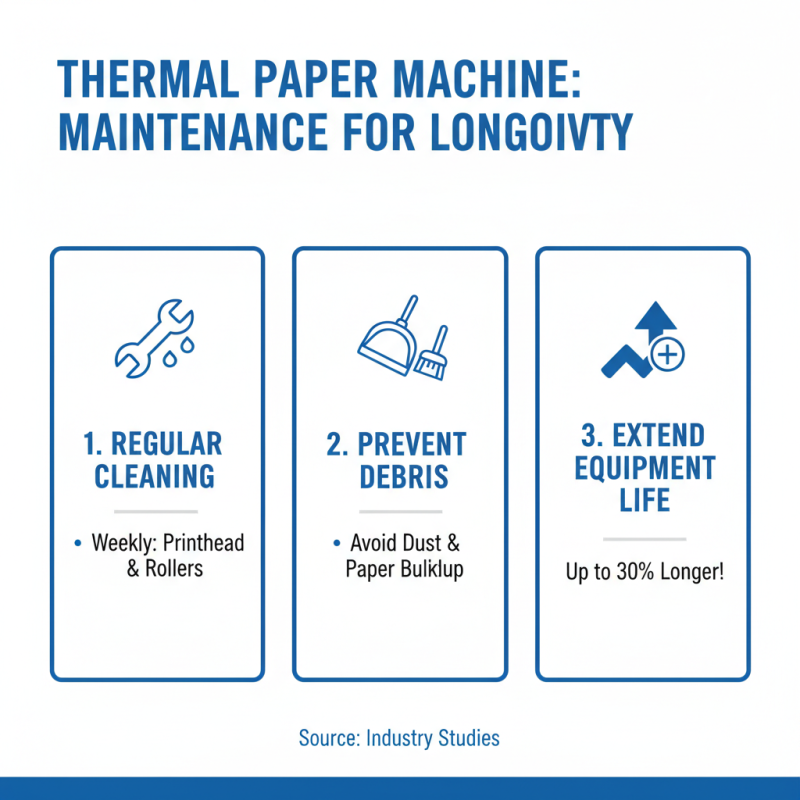
Maintaining a thermal paper machine is crucial for its longevity and performance. Regular cleaning is essential. Dust and paper debris can accumulate and lead to issues. Studies show that businesses can extend equipment life by up to 30% with proper maintenance. Cleaning the printhead and rollers every week can prevent malfunctions.

Temperature control also plays a vital role. Thermal paper machines work best in stable environments. Excessive heat can cause paper jams and print quality issues. According to industry reports, operating in temperatures between 20°C and 25°C reduces wear and tear. It's wise to monitor the ambient temperature and avoid direct sunlight on your machine.

Finally, use quality thermal paper. Subpar products may leave residues that damage your machine. A report indicated that 40% of thermal printer problems stem from using inferior paper. Investing in good paper ensures better print quality and less maintenance. Regularly check paper stock for damage and replace it as necessary. These practices foster not only longevity but also enhance your business operations.