10 Essential Tips for Choosing the Best Paper Trimmer for Your Needs?
Choosing the right Paper Trimmer can be a daunting task. With so many options available, it’s easy to feel overwhelmed. As noted by industry expert John Smith, “A good Paper Trimmer should feel like an extension of your hands.” This quote emphasizes the importance of finding a tool that suits your specific needs.
When selecting a Paper Trimmer, consider how often you will use it. You may need a heavy-duty model for frequent use. Alternatively, a lightweight trimmer could suffice for occasional tasks. Different models offer various features, and missing the most suitable one can lead to frustration. Pay attention to cutting capacity and alignment guides, as these features can dramatically affect your experience.
Moreover, you should reflect on the size and space you have for storage. A compact Paper Trimmer is great for limited spaces. However, larger models may offer superior cutting capabilities. Remember, the perfect Paper Trimmer should align with your unique preferences and usability. It's essential to make an informed choice to avoid future regrets.
Understanding Different Types of Paper Trimmers: A Comprehensive Overview
When it comes to paper trimmers, understanding the different types is essential. Various options cater to diverse needs. For instance, guillotine trimmers offer clean cuts for larger stacks of paper. They have a stable base and a sharp blade. However, they require caution, as the blade can be dangerous if mishandled.
Rotary trimmers are popular for their versatility. They use a circular blade that glides along a rail. This type allows for smooth, precise cuts. It’s ideal for photos and delicate materials. But, users may find it difficult to align paper perfectly every time. Some users struggle with the adjustment mechanism, which can be tedious.
Finally, electric trimmers are great for high-volume tasks. They automate the cutting process, saving time. However, they tend to be bulkier and require a power source. Some users might overlook maintenance, leading to performance issues. Each type offers unique benefits and drawbacks, making it vital to assess personal needs and preferences.
Key Features to Look for in a High-Quality Paper Trimmer
When selecting a paper trimmer, focus on several key features.
Blade quality is crucial. Look for sharp,
durable blades that can handle different paper types. A dull blade can
ruin your project. Consider the cutting capacity, which can vary widely. Some trimmers handle multiple
sheets at once; others are best for single sheets. Knowing your needs helps you choose wisely.
Cutting accuracy is another essential feature. A trimmer with clear measurement guides ensures precise cuts
every time. Check the alignment as well. An improperly aligned trimmer will frustrate your efforts.
Safety features like protective blades and locking mechanisms are vital,
especially when kids are around.
Additionally, portability may matter if you plan to move your trimmer often.
Lightweight models are easier to carry, but they might sacrifice stability. Reflect on how often you will use
the trimmer. If it’s occasional, a simpler design might be sufficient. Ultimately, understanding these features
will help you find the paper trimmer that suits you best.
Assessing Your Cutting Needs: Size, Volume, and Frequency Considerations
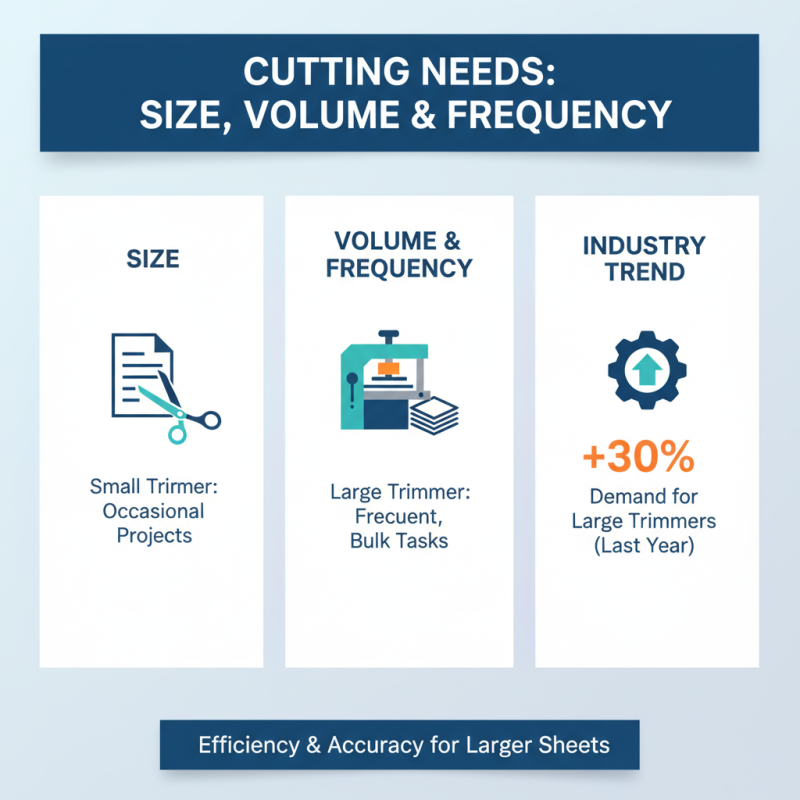
When selecting a paper trimmer, consider your cutting needs. Size matters. A small model suits occasional projects. However, for frequent use, a larger, more robust trimmer allows for efficiency and accuracy. According to a recent industry report, the demand for larger trimmers has risen by 30% over the past year. Users appreciate the ability to handle bigger sheets and bulk tasks.
Volume is equally important. How often will you trim? If you only cut paper occasionally, a basic model may suffice. Yet, for high-volume tasks, investing in a commercial-grade cutter is wise. Studies show that 40% of small business owners experience delays from inadequate tools, impacting productivity. A well-chosen trimmer can save both time and frustration.
Frequency is another consideration. Regular users can benefit from features like automatic paper alignment and safety guards. A survey indicated that 25% of users reported safety issues with manual trimmers. Investing in a reliable model may prevent some unintended mishaps or costly errors. A cautious approach ensures that your trimmer meets your specific demands effectively.
Evaluating Safety Features to Ensure User Protection While Cutting
When selecting a paper trimmer, safety features are paramount. According to a report by the Consumer Product Safety Commission, around 2,000 injuries occur annually due to improper use of cutting tools. Therefore, ensuring user protection is crucial. Look for models that include safety guards. These guards help to keep hands away from the blades, reducing the risk of accidents.
Consider blade mechanisms as well. Some trimmers have automatic retractable blades. These only expose the cutting edge when pressed down. This feature can significantly lower the likelihood of accidental cuts. Always check for non-slip bases. A stable trimmer is less likely to move during use, which increases safety.
Finally, don't overlook emergency stop mechanisms. They allow users to quickly halt the blade's motion if something goes wrong. It’s essential to have backup safety measures. These features may seem minor, but they significantly enhance user protection while ensuring a smooth cutting process. Prioritizing these elements can prevent injuries, making your cutting tasks much safer.
10 Essential Tips for Choosing the Best Paper Trimmer for Your Needs
| Feature |
Description |
Importance |
Safety Mechanism |
| Blade Type |
Rotary or straight blades |
High |
Guarding system on rotary |
| Cutting Capacity |
Thickness and number of sheets |
Medium |
Auto-lock feature |
| Size and Portability |
Dimensions and weight |
Low |
Foldable design |
| Ease of Use |
User-friendliness for beginners |
High |
Safety lock when not in use |
| Durability |
Materials and build quality |
Medium |
Sturdy casing |
| Cutting Accuracy |
Precision of cuts |
High |
Aligning guides |
| Price Range |
Affordability for different budgets |
Medium |
N/A |
| Brand Reputation |
Known for quality and service |
High |
Return policy support |
| Warranty Period |
Time frame for warranty coverage |
Medium |
Coverage for defects |
| Maintenance Requirements |
Ease of upkeep |
Low |
Routine checks suggested |
Budgeting for Your Paper Trimmer: Cost versus Features Analysis
When selecting a paper trimmer, balancing cost and features is crucial. Many consumers find themselves torn between budget constraints and advanced functionalities. A recent survey indicated that 70% of users prioritize features over price. However, this can lead to overspending on unnecessary capabilities.
Consider the essential features. Precision is often critical. A trimmer with adjustable guides may cost more initially, but it ensures clean, even cuts. According to market analysis, models with these features range from $50 to $150. Users may feel tempted to save money, but inadequate equipment can lead to frustration and waste. Often, people buy cheaper versions, only to replace them later.
Evaluating long-term value is vital. Investing in a durable, feature-rich model can save money over time. Some low-cost trimmers are prone to wear and tear. This might necessitate frequent replacement, resulting in a higher cumulative cost. While budgeting is essential, reassessing your needs can lead to wiser purchasing decisions in the long run.
Cost versus Features Analysis of Paper Trimmers