Leave Your Message
AI Helps Write

Top 10 Centrifugal Blower Manufacturers Worldwide?

Choosing the right Centrifugal Blower involves more than comparing airflow figures or motor ratings. Industrial buyers must consider pressure stability, energy consumption, noise, maintenance access, and operating conditions. A blower that performs well in a clean workshop may struggle in a dusty cement plant.

This guide examines ten leading centrifugal blower manufacturers worldwide. The comparison considers product engineering, manufacturing experience, application coverage, technical support, efficiency data, and customer trust. It also reviews practical details, such as impeller design, bearing systems, corrosion resistance, vibration control, and spare-parts availability. These factors often decide whether equipment runs reliably after installation.

Performance matters most.

Information is drawn from manufacturer documentation, established industry practices, and publicly available technical evidence. However, published specifications do not always reflect field performance. Installation quality, duct design, ambient temperature, and maintenance routines can change results significantly. That limitation deserves attention.

The ranking is therefore a useful reference, not an absolute verdict. Some manufacturers specialize in high-pressure process air, while others focus on ventilation, dust collection, or customized systems. A smaller supplier may offer faster engineering support than a larger global brand. Conversely, a broad service network can reduce downtime across multiple facilities.

Readers should verify current models, certifications, warranty terms, and local support before making a purchase. Needs vary by industry. The best choice depends on the complete operating picture, not reputation alone.
Top 10 Centrifugal Blower Manufacturers Worldwide?

Centrifugal Blower Fundamentals: Airflow, Pressure, Efficiency, and Applications

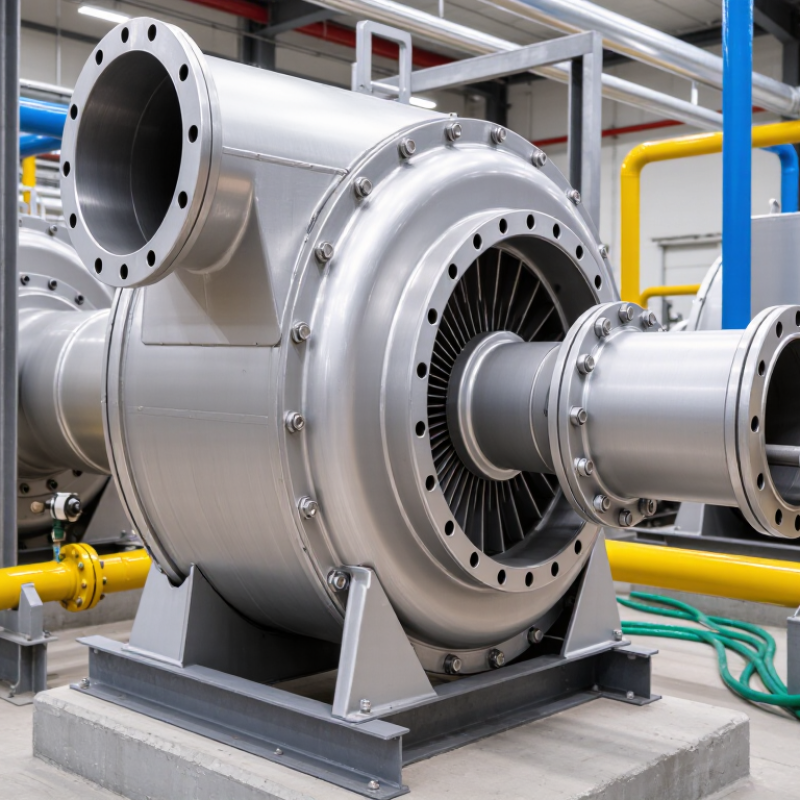
Centrifugal blower performance begins with a simple relationship between airflow and pressure. An impeller accelerates air outward, while the housing converts velocity into useful pressure. Airflow is measured in cubic meters per hour or cubic feet per minute. Pressure is commonly reported in pascals. Static pressure reflects resistance in ducts, filters, dampers, and equipment. Total pressure also includes air velocity effects.

Efficiency depends on motor input, impeller design, operating speed, and system matching. A blower running far from its best-efficiency point may consume more energy and produce unstable airflow. In industrial ventilation, dust collection, drying, combustion support, and cooling, small design errors can create noise, vibration, or overheating. Field measurements often expose a gap between catalog values and actual conditions. A clean test sheet is not enough. Real ducts are rarely perfect.

Tips: Confirm airflow and pressure together, not separately. Check the fan curve against the system curve. Measure filter loading regularly. Leave access for cleaning and inspection. Avoid selecting a larger blower only for safety; oversizing can waste power and increase control problems. When comparing manufacturers, review tested performance, material quality, balancing standards, service support, and application experience. Efficiency claims deserve operating-point data. That detail is often missing.
Global Market Scope and the Criteria Used to Rank the Top 10 Manufacturers

Ranking the top 10 centrifugal blower manufacturers requires more than comparing product catalogs. The global market includes suppliers from North America, Europe, East Asia, and emerging industrial regions. Each market has different energy rules, operating temperatures, labor costs, and maintenance expectations. The ranking should reflect real equipment performance across these conditions.

Our evaluation uses measurable and practical criteria. Energy efficiency receives significant weight because blower systems often run continuously. We also examine airflow range, pressure stability, noise control, material quality, and motor compatibility. Factory testing, published technical data, and verified installation records support the assessment. Service coverage matters too. A strong supplier should provide spare parts, commissioning guidance, and responsive field support across major regions. Safety certifications and quality-management systems strengthen reliability, but paperwork alone cannot prove performance.

Customer experience adds another layer. We review operating histories from wastewater plants, pneumatic conveying lines, power facilities, and process factories. Maintenance intervals, failure patterns, and control-system integration reveal details brochures may omit. Innovation is considered through variable-speed control, remote monitoring, compact designs, and lower lifecycle emissions. Financial stability also helps indicate whether support will continue after installation. A ranking is never perfect. Data availability differs between regions, and some smaller manufacturers report less publicly. That limitation deserves attention. Results should therefore be reviewed periodically, especially when energy prices, regulations, or industrial demand change.

Top 10 Centrifugal Blower Manufacturers by Technology, Capacity, and Reach

The top ten centrifugal blower manufacturers should be judged beyond sales volume. Technology matters: backward-curved impellers support efficient, stable airflow, while high-pressure radial designs suit pneumatic conveying and process exhaust. According to the U.S. Department of Energy’s fan-system guidance, better system design and controls can reduce fan energy consumption by around 10% to 20% in suitable facilities. That makes motor efficiency, variable-speed drives, sealing, and noise control important ranking factors.

Capacity separates suppliers serving laboratories from those supporting steel, cement, wastewater, and chemical plants. Large industrial units may handle hundreds of thousands of cubic meters per hour, while compact blowers prioritize precise pressure control. Market research from Grand View Research identifies rising demand for energy-efficient air-moving equipment, driven by industrial automation, stricter efficiency expectations, and expanding infrastructure. The report also highlights Asia-Pacific as a major growth region, although local service quality can differ sharply.

Reach is more than exporting equipment. A credible manufacturer needs regional engineering teams, spare-parts access, testing records, and commissioning support. The top ten therefore include producers with broad production capacity, proven custom-engineering experience, and dependable after-sales networks. A revenue-only ranking is imperfect. It may reward scale while overlooking lifecycle cost. Buyers should compare brake horsepower, efficiency at operating points, vibration levels, pressure stability, and maintenance intervals. One practical warning remains: published airflow figures can look impressive, but actual performance often changes after duct losses, filters, dampers, and installation errors are included.

Top 10 Centrifugal Blower Manufacturers Worldwide? – Top 10 Centrifugal Blower Manufacturers by Technology, Capacity, and Reach

Comparative, anonymized market table based on publicly documented centrifugal-blower product capabilities, industrial applications, and international supply coverage.

Rank Anonymized Manufacturer Profile Primary Technology Typical Airflow Range Typical Pressure Range Drive Configuration Efficiency Focus Common Materials Primary Applications Geographic Reach Relevant Compliance Options
1 Profile A
Large-scale industrial blower specialist
Backward-curvedHeavy-duty centrifugal 5,000–500,000 m³/h 1,000–15,000 Pa Belt-driven and direct-coupled High-efficiency impellers; variable-frequency-drive compatibility Carbon steel, galvanized steel, stainless steel Power generation, cement, metals, mining, process ventilation North America, Europe, Asia-Pacific, Middle East ISO 9001 manufacturing systems; CE and project-specific hazardous-area options
2 Profile B
Energy-efficient HVAC and process-air supplier
Plug fanEC motorBackward-inclined 1,000–180,000 m³/h 300–4,500 Pa Direct-drive electronically commutated motor High part-load efficiency; integrated speed control Aluminum, coated steel, stainless steel Commercial HVAC, data centers, cleanrooms, air-handling units Europe, North America, Asia-Pacific CE, EMC, RoHS, ErP-related efficiency requirements where applicable
3 Profile C
High-pressure process-blower manufacturer
Multistage centrifugalRegenerative 100–25,000 m³/h 5,000–35,000 Pa Direct drive or close-coupled motor Compact high-pressure design; low-maintenance operation Aluminum alloy, stainless steel, cast iron Wastewater aeration, pneumatic conveying, vacuum lifting, packaging Worldwide through distributors and system integrators CE, UL/CSA motor options, ISO 9001 quality systems
4 Profile D
Industrial ventilation and smoke-control supplier
Forward-curvedBackward-curvedSmoke exhaust 2,000–250,000 m³/h 500–8,000 Pa Belt-driven, direct-drive, and plug-fan configurations Optimized aerodynamic blades; acoustic packages available Galvanized steel, painted steel, stainless steel Building ventilation, tunnels, car parks, industrial exhaust Europe, Middle East, Africa, Asia-Pacific CE; fire and smoke-control testing available by configuration
5 Profile E
Process-equipment and factory-automation supplier
Radial-bladeHigh-temperature 500–120,000 m³/h 1,500–12,000 Pa Belt-driven or shaft-mounted drive Robust impeller design for dust-laden air and variable loads Carbon steel, abrasion-resistant steel, stainless steel Foundries, dryers, furnaces, dust collection, woodworking North America, Latin America, Europe, Asia ISO 9001; ATEX-suitable configurations for selected applications
6 Profile F
Wastewater and environmental-equipment specialist
Single-stageMultistageOil-free air 200–30,000 m³/h 8,000–60,000 Pa Direct-coupled motor with inverter control Oil-free compression; stable aeration performance Cast aluminum, stainless steel, coated steel Biological wastewater treatment, flotation, fermentation, aquaculture Asia-Pacific, Europe, North America, Middle East CE; motor and electrical packages aligned with regional requirements
7 Profile G
Customized OEM blower and fan producer
Backward-inclinedAirfoilCustom impeller 800–150,000 m³/h 400–6,000 Pa AC motor, EC motor, or external-drive assembly Application-specific aerodynamic optimization Galvanized steel, aluminum, stainless steel, composite components OEM air handlers, refrigeration, electronics cooling, industrial machinery Global OEM supply and contract-manufacturing channels CE, UL/CSA component options, RoHS and REACH support
8 Profile H
Combustion-air and thermal-process supplier
High-temperature centrifugalCombustion air 300–80,000 m³/h 1,000–20,000 Pa Belt-driven or motor-integrated direct drive High-temperature seals; stable operation under thermal cycling Carbon steel, stainless steel, heat-resistant alloys Industrial ovens, kilns, burners, thermal oxidizers, dryers Europe, North America, Asia-Pacific CE; burner, machinery, and hazardous-location options by project
9 Profile I
Clean-air and precision-environment specialist
Low-noise centrifugalEC plug fan 500–70,000 m³/h 250–3,500 Pa Direct-drive EC or electronically controlled AC motor Low sound power; precise airflow modulation Aluminum, stainless steel, powder-coated steel Cleanrooms, laboratories, hospitals, semiconductor facilities Europe, North America, East Asia, Southeast Asia CE, EMC, RoHS; cleanroom and hygiene configurations available
10 Profile J
Regional heavy-industry blower manufacturer
Radial-bladeDouble-inletDust-handling 3,000–300,000 m³/h 800–10,000 Pa Belt-driven and pedestal-mounted Wear-resistant construction; serviceable bearing assemblies Steel mills, aggregates, cement, grain handling, bulk solids Domestic markets with export coverage across neighboring regions ISO 9001; CE or equivalent regional conformity marking where required
Data note: Airflow and pressure figures are representative published operating envelopes for comparable centrifugal-blower product families, not guaranteed ratings for every model. Actual performance depends on impeller diameter, speed, air density, temperature, system resistance, motor selection, and application-specific configuration. Rankings reflect a qualitative comparison of technology breadth, capacity range, application coverage, and international reach.

Performance Comparison Using AMCA 210, ISO 13349, and IEC 60034 Standards

A credible top-ten centrifugal blower comparison must begin with tested evidence, not catalogue claims. AMCA 210 measures airflow, pressure, power, and fan efficiency under controlled laboratory conditions. These results reveal whether a blower maintains pressure when resistance rises. That detail matters in dusty ducts and crowded production lines. Small differences become expensive.

ISO 13349 improves technical consistency by defining fan terminology, classifications, and operating descriptions. It does not replace performance testing. This distinction is often missed. IEC 60034-30-1 evaluates motor efficiency classes, such as IE2, IE3, and IE4. However, a highly efficient motor cannot rescue poor impeller design or excessive system resistance. The complete package requires fan efficiency, motor losses, drive performance, and control strategy.

The IEA 4E Electric Motor Systems Annex reports that motor-driven systems consume roughly 40% of global electricity, showing why blower selection deserves financial scrutiny. U.S. Department of Energy fan-system guidance also identifies throttling and oversized equipment as common sources of avoidable waste. For each manufacturer in a top-ten list, buyers should request AMCA 210 test curves, ISO 13349-compliant terminology, and IEC motor data. Published figures may still lack identical duty points. That weakens direct ranking. My comparison would therefore score measured efficiency, pressure stability, sound levels, service access, and part-load behavior. Laboratory precision helps, but field conditions remain less forgiving.

Selecting a Manufacturer by Energy Efficiency, Noise Levels, Service, and Cost

Top 10 Centrifugal Blower Manufacturers Worldwide: Choosing by Efficiency, Noise, Service, and Cost

When comparing ten shortlisted manufacturers, start with tested performance, not brochure claims. The International Energy Agency estimates that electric motor systems consume about 46% of global electricity. Centrifugal blowers can therefore create substantial operating costs over many years. Ask for certified airflow, pressure, efficiency, and speed data at your actual duty point. Oversizing is common. It quietly increases energy use, throttling losses, and noise.

Noise should be measured as sound power, not described as “quiet.” Request test results based on recognized methods, such as ISO 3744 or AMCA standards. Check octave-band data if the blower will operate near offices, hospitals, or production teams. The U.S. Department of Energy recommends system-level assessment, including duct resistance, controls, maintenance, and motor efficiency. A highly efficient blower can still waste energy when poorly selected.

Tips: Compare total ownership cost over 10 years. Include electricity, filters, bearings, controls, downtime, and technician travel. Ask whether local service teams hold documented training records and stock critical parts. Review warranty exclusions carefully. A cheaper unit may become expensive after one failed bearing. My own practical preference is clear: choose measured data over impressive promises, although even good calculations need field verification after installation.