Leave Your Message
AI Helps Write

China Top 10 Grinder Machine Manufacturers?

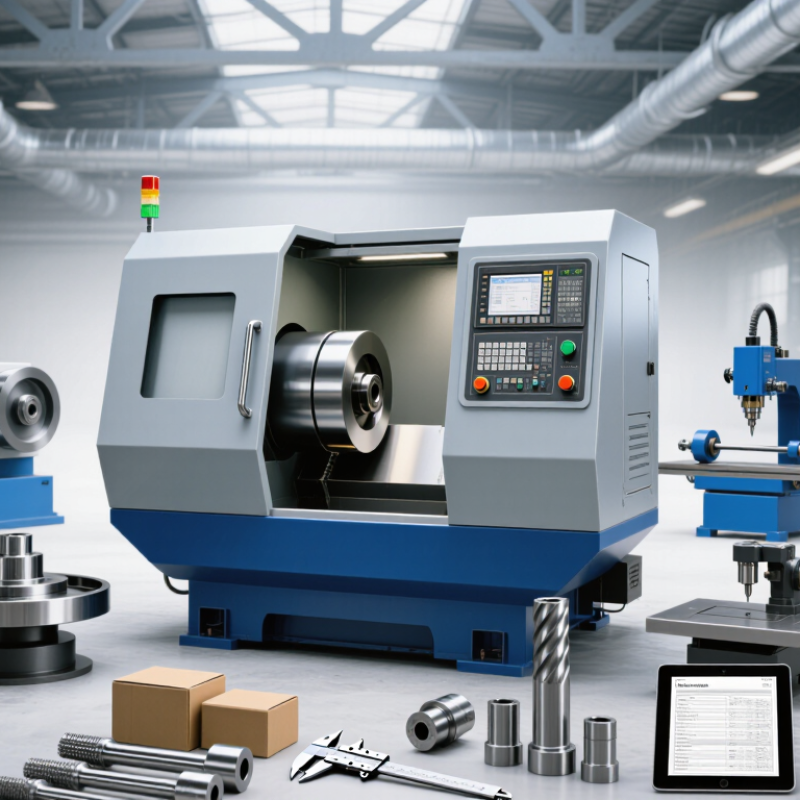
China Top 10 Grinder Machine Manufacturers? This guide examines leading Chinese suppliers through practical, measurable criteria. It considers machine accuracy, spindle stability, grinding-wheel compatibility, automation, safety systems, and long-term service. Factory audits, product catalogs, technical datasheets, and customer feedback provide useful evidence.

A Grinder Machine should do more than look advanced in a showroom. Its performance appears in repeatable tolerances, smooth surface finishes, stable coolant flow, and consistent output during long shifts. We also examine CNC capability, training support, spare-part availability, export experience, and documented quality systems. Stephen Malkin, a respected grinding-technology researcher, observes, “Grinding is a complex machining process with a great number of parameters.” That warning matters. A strong manufacturer understands the complete process, not only the machine frame.

The selected companies represent different strengths. Some focus on cylindrical grinding. Others specialize in surface, centerless, tool, or precision internal grinding equipment. Their suitability depends on material, workpiece size, production volume, and required tolerance. No ranking is permanently perfect. Market information changes, and published specifications may not reveal every maintenance difficulty. Buyers should request sample grinding results, inspect finished workpieces, and confirm service response times before signing a contract. A careful comparison can prevent expensive downtime. This article offers a structured starting point, not a substitute for technical validation.
China Top 10 Grinder Machine Manufacturers?

China’s Grinder Machine Industry: 2023 Output, Exports, and Market Structure

China’s grinder machine industry entered 2023 with uneven momentum. Data from the China Machine Tool Industry Association reported total machine-tool production of about RMB 431.9 billion, with metal-cutting tools forming the larger segment. Grinding machines remain a specialized category, serving automotive parts, bearings, tools, and precision components. However, public statistics rarely separate every grinder type. This limits direct comparison.

Trade data offers a clearer signal. UN Comtrade records China as a major exporter under HS 8460, covering grinding, sharpening, deburring, and related machine tools. In 2023, export value for this category remained substantial, while average prices varied sharply by automation level and accuracy.

Basic units compete on cost. Advanced systems depend more on control software, spindle stability, and after-sales service. China’s market structure is therefore fragmented, with many mid-sized factories and a smaller group focused on high-precision equipment. That description is useful, but not perfect.

Tips: Check HS codes carefully before comparing export figures. Ask manufacturers for spindle accuracy, test records, sample grinding results, and service coverage. A low quotation may hide tooling, installation, or calibration costs. Reports from the International Trade Centre and the China Machine Tool Industry Association should be cross-checked, because product classifications and reporting methods differ. Real factory audits still matter.
Grinder Types Explained: CNC, Surface, Cylindrical, Centerless, and Tool Grinders

When comparing China’s top grinder machine manufacturers, begin with the grinding task, not the catalog. CNC grinders suit complex profiles and repeated production. They offer programmable wheel paths and tighter process control. Operators can adjust feed rates, dressing cycles, and coolant flow.

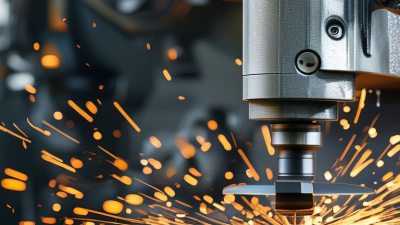
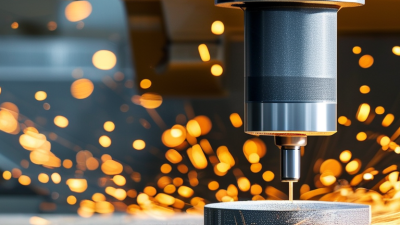
Surface grinders create flat, accurate faces on plates, dies, and fixtures. A magnetic chuck holds the workpiece firmly during passes. Fine sparks and steady table movement often indicate stable contact.

Cylindrical grinders work on external or internal round surfaces. They are useful for shafts, sleeves, and bearing seats. Centerless grinders remove the need for centers or chucking. A regulating wheel controls rotation while the grinding wheel removes material. Tool grinders sharpen cutters with carefully controlled angles. Small errors can change cutting performance.

I have seen specifications look impressive, yet poor coolant filtration reduced finish quality. That detail is easy to miss. Check spindle runout, dressing equipment, measurement methods, and after-sales training. A machine can be accurate on paper but difficult to maintain in a busy workshop. Consider production volume, material hardness, tolerance, operator skill, and available floor space before requesting quotations.

Ranking the Top 10 Manufacturers by Capacity, Export Reach, and R&D Investment

China’s top 10 grinder machine manufacturers should be ranked by measurable performance, not visibility alone.

This review weighs annual production capacity, export reach, and R&D investment. Factory scale matters, but unused assembly space proves little. A stronger signal is consistent output across multiple production lines, with documented quality checks.

Manufacturers near the top typically operate large machining workshops, automated inspection stations, and dedicated testing areas. Their machines serve metalworking, automotive, toolmaking, and precision component plants.

Export reach is measured through distributor coverage, shipment history, technical support, and installation records across several regions. R&D investment also deserves close attention. Look for in-house engineers, spindle testing, software development, energy-efficiency projects, and published technical improvements. Patent counts help, but they never tell the whole story. Some useful innovations remain unpublished.

Tips: Request capacity figures from the previous three years. Check whether export claims match customs records, local service teams, and customer references. Ask for test-grinding results using comparable materials. Small details matter, such as surface finish, vibration control, cooling performance, and replacement-part response time.

This ranking is not perfect. Public data can be incomplete, and factory claims may change quickly. A manufacturer with lower output might still deliver better precision for specialized orders.

Buyers should therefore compare audited evidence, site-visit findings, and long-term maintenance feedback before making a final decision.

Comparing Technical KPIs: Accuracy, Spindle Speed, Power, Throughput, and Microns

China Top 10 Grinder Machine Manufacturers?

Comparing China’s top ten grinder machine manufacturers requires more than reading catalog specifications. Accuracy should include positioning, repeatability, and finished-part variation. A machine claiming 2-micron capability may produce 5 microns under heat, vibration, or poor fixturing. Ask for inspection reports from real production samples.

Spindle speed affects wheel behavior, but higher RPM is not automatically better. Match speed with wheel diameter, material, and surface-finish requirements. Motor power, measured in kilowatts, influences cutting stability during heavy stock removal. Throughput should be measured in finished pieces per hour, including loading, dressing, inspection, and changeover time. A faster cycle may still lose money if dressing interrupts production.

Tips: Request a witnessed trial using your material and drawing. Check temperature drift after several hours. Review calibration records, spindle runout, coolant control, and service response times. Compare microns at the same measuring temperature. This detail matters.

In practice, manufacturers often present ideal laboratory results. Factory conditions can be less forgiving. A reliable comparison should record wheel type, feed rate, dressing interval, operator skill, and duty cycle. I would not rank suppliers from brochures alone; that approach sounds efficient but remains incomplete. The best choice balances verified accuracy, usable speed, sufficient power, stable throughput, and repeatable micron-level results.

Verifying Quality Through ISO 9001, ISO 230-2, CE Compliance, and Service Networks

China Top 10 Grinder Machine Manufacturers?

When comparing China’s top 10 grinder machine manufacturers, buyers should look beyond polished catalogs. Quality becomes visible through documents, testing, and daily support. ISO 9001 shows that a manufacturer controls key processes, including purchasing, inspection, and corrective actions. It does not guarantee perfect machines. Request the certificate scope and confirm its validity with the issuing body.

ISO 230-2 testing is more specific. It evaluates positioning accuracy and repeatability under defined conditions. Ask for recent test reports linked to the machine’s serial number. Numbers need context. Check the testing temperature, measuring equipment, and compensation settings. A report without these details may look impressive but remain difficult to verify. This is where many comparisons become incomplete.

CE compliance should include a valid Declaration of Conformity, risk assessment, and clear safety documentation. Do not treat a CE mark as a substitute for hands-on inspection. During a factory audit, examine guarding, emergency stops, wiring labels, and coolant control. Service networks matter just as much. A dependable supplier should provide remote diagnostics, spare-parts access, installation guidance, and trained regional technicians. Response time matters.

Ask for an application-specific factory acceptance test. Grind a sample part and measure its surface finish, size control, and thermal stability. In practical evaluations, small details often reveal larger weaknesses, such as unclear maintenance instructions or slow technical replies. Some manufacturers may meet certification requirements yet lack strong field support. That gap deserves careful questioning before purchase.

China Top 10 Grinder Machine Manufacturers? - Verifying Quality Through ISO 9001, ISO 230-2, CE Compliance, and Service Networks

Anonymized supplier-screening matrix for comparing quality documentation, machine accuracy verification, compliance evidence, and after-sales capability.

Rank Anonymized Manufacturer Profile Typical Grinder Focus ISO 9001 Evidence ISO 230-2 Accuracy Report CE Compliance File Service Network Spare-Parts Readiness Documentation Score Verification Priority
1 Manufacturer Profile 01 CNC surface and cylindrical grinders Certificate available Available by model Complete file Regional + overseas agents 12–24 months planned stock 9.2/10 Low
2 Manufacturer Profile 02 Universal cylindrical grinders Certificate available Factory test data Complete file Domestic + selected export markets Common parts stocked 8.8/10 Moderate-Low
3 Manufacturer Profile 03 Tool and cutter grinding machines Certificate available Available for selected models Complete file Distributor-led support Core parts available 8.5/10 Moderate
4 Manufacturer Profile 04 Heavy-duty roll and bearing grinders Certificate available Customer acceptance report Declaration available Project-based overseas service Made-to-order parts 8.1/10 Moderate
5 Manufacturer Profile 05 Centerless grinding machines Certificate available Request before purchase Declaration available Regional technical partners Standard parts available 7.8/10 Moderate
6 Manufacturer Profile 06 Precision surface grinders Certificate stated; verify scope Factory test data Declaration available Domestic service network Common parts stocked 7.5/10 Moderate
7 Manufacturer Profile 07 Gear and form grinding systems Verify current certificate Available on request Declaration available OEM-trained partners Critical parts by order 7.3/10 High
8 Manufacturer Profile 08 Small and medium-size CNC grinders Certificate stated; verify issuer Not routinely published Declaration available Distributor support Basic parts availability 6.9/10 High
9 Manufacturer Profile 09 Manual and semi-automatic grinders Request valid certificate Not routinely published Basic declaration Local service only Limited stock 6.2/10 High
10 Manufacturer Profile 10 Entry-level grinding equipment Evidence not yet verified Evidence not yet verified Request technical file Factory-direct support Order-based supply 5.6/10 Very High

Verification Notes

ISO 9001 confirms an audited quality-management system; it does not by itself guarantee machine accuracy. ISO 230-2 evidence should identify the exact machine, test date, measuring equipment, environmental conditions, positioning-error results, and test standard used.

CE documentation should normally include the EU Declaration of Conformity, applicable directives and standards, risk assessment, electrical drawings, user instructions, and technical-file support. Certificate validity, scope, model coverage, and service capability should be rechecked before purchase.