Leave Your Message
AI Helps Write

Why Choose a Printing Paper Machine for Your Business?

Choosing a Printing Paper Machine is a practical business decision, not merely an equipment purchase. It affects paper quality, production speed, energy use, waste, and customer trust. A suitable machine can produce consistent sheets with controlled moisture, smooth surfaces, and accurate grammage. These details matter when customers inspect every page under bright office lighting.

Pasi Laine, former President and CEO of Valmet, has stated, “Sustainability is a megatrend that will shape our industry and our customers’ businesses.” His view reflects a real production challenge. Modern mills must reduce energy consumption while maintaining stable output. A well-designed Printing Paper Machine can support this goal through efficient drying systems, automated web control, and reduced paper breaks. It may also improve coating performance and help operators respond faster to changing orders.

The right choice depends on more than maximum speed. Consider available fiber, paper grades, machine width, maintenance skills, spare-part access, and local service support. A machine running at impressive speed is not useful if it creates frequent downtime or excessive trim waste. This is often overlooked.

Real experience matters here. Operators may notice a vibrating roll before software reports a fault. Engineers may identify moisture variation by examining a paper reel’s edges. Small observations can prevent large losses.

Still, no machine solves every problem. Installation costs, training gaps, and changing market demand require honest planning. Businesses should compare lifecycle costs, not only the initial price. A careful evaluation can turn a Printing Paper Machine into a dependable production asset, though mistakes remain possible. That is why technical trials and supplier verification deserve serious attention.

Why Choose a Printing Paper Machine for Your Business?

What Is a Printing Paper Machine?

What Is a Printing Paper Machine?

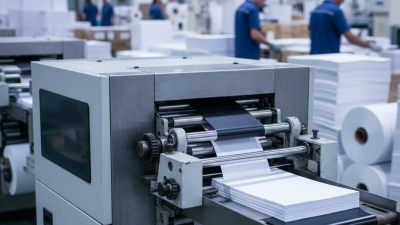
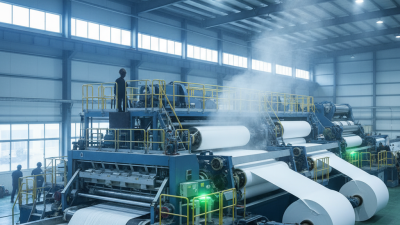
A printing paper machine is industrial equipment that turns prepared pulp into continuous paper rolls or sheets. It forms fibers on a moving wire, removes water through pressing, then dries the web with heated cylinders. Calendering smooths the surface, while reels collect the finished paper.

In practical terms, it is a controlled production line, not a single device. Operators monitor moisture, basis weight, thickness, tension, and surface finish. These measurements affect ink absorption, folding behavior, and runnability on printing presses. A well-adjusted machine supports consistent output, but poor fiber preparation can still cause defects.

For a business, choosing this equipment means matching capacity with product requirements. A machine designed for lightweight coated stock may not suit heavier packaging grades. Consider forming width, speed range, drying efficiency, automation, maintenance access, and floor space.

Ask for test data under conditions close to your intended production. Supplier claims need verification. I would also review energy use, spare-part availability, operator training, and water-treatment needs.

These details often shape the real cost more than the purchase price. A larger machine is not automatically better.

Tips:

Start with a clear paper-grade specification. Record target basis weight, moisture, brightness, opacity, and reel width. Visit an operating mill if possible.

Watch the paper during web breaks, not only during a smooth demonstration. That imperfect moment can reveal more about control quality.

Leave room for upgrades, because production goals usually change.
How Does a Printing Paper Machine Work?

A printing paper machine supports consistent paper production for commercial printing businesses. Its main work begins with cleaned pulp, water, and carefully measured additives. The mixture enters the headbox as a smooth, even flow. It spreads across a moving forming wire. Water drains through the mesh, leaving a wet fiber sheet.

The sheet then passes through press rolls. These rolls remove more water and improve fiber bonding. Heated drying cylinders reduce moisture to the target level. Depending on the paper grade, the machine may apply surface sizing or coating. A calender later smooths the surface and controls thickness. Sensors check moisture, weight, tension, and defects during production. The finished paper is wound into a large reel.

Tips: Keep pulp consistency stable. Check moisture sensors often. Small changes can affect ink absorption and folding performance. Operators should also inspect rolls and dryer surfaces daily. Neglecting one area may create visible streaks.

A printing paper machine can improve speed, uniformity, and production planning. However, high output alone does not guarantee better paper. Excessive drying may cause curl. Heavy calendering can reduce stiffness. These trade-offs require testing with actual printing conditions. A practical trial should measure runnability, surface smoothness, dust levels, and ink drying. Some settings may look efficient but perform poorly after conversion or printing. Careful records help teams adjust the process instead of relying on guesswork.

Which Businesses Need a Printing Paper Machine?

A printing paper machine suits businesses that produce paper materials regularly, not occasionally. Commercial print shops often need reliable output for brochures, invoices, menus, flyers, and business forms. Their customers may request different paper weights, colors, and finishing details within one week. A suitable machine can reduce outsourcing delays and give operators better control over print quality.

Publishers, stationery makers, and packaging workshops may also benefit. A small publisher might print short book runs without storing thousands of unused copies. A stationery business can create branded cards, envelopes, and notepads in changing designs. Packaging producers may use specialized equipment for paper sleeves, labels, or folding cartons. Schools, hospitals, and large offices could consider an in-house machine when confidential documents require controlled production.

Volume matters most.

A machine is not automatically a smart investment. Businesses should compare monthly paper use, operator training, maintenance access, power consumption, and floor space. Paper dust can affect performance, especially in busy rooms with weak ventilation. I have seen purchasing plans focus on speed while ignoring setup time and waste sheets. That mistake can raise costs quietly. A careful trial with real paper samples is more reliable than a dramatic catalog specification. Smaller companies may need flexible equipment, while high-volume facilities usually prioritize automation and consistent registration. Local safety requirements and responsible waste handling should also guide the decision.

What Are the Main Business Benefits?

A printing paper machine can turn a business from a buyer into a more controlled producer. It makes paper near the point of use, reducing dependence on changing supplier schedules. Production managers can adjust basis weight, sheet size, surface finish, and moisture for specific orders. That flexibility matters when customers request short runs or unusual specifications. Less waiting time helps sales teams promise realistic delivery dates. It also reduces emergency purchasing.

The financial benefit is not simply a lower paper price. A well-planned machine can reduce freight, storage, and waste from unsuitable stock. Operators can monitor pulp flow, drying temperature, and reel tension during production. Stable controls improve consistency between batches, which protects print quality and reduces rejected sheets. Digital records also support traceability and more disciplined quality checks. These details build customer trust over time. Reliability is earned quietly.

There is a less comfortable point. The equipment requires capital, trained operators, maintenance planning, energy, and floor space. If demand is irregular, its capacity may remain unused. A careful feasibility study should compare output, labor, utilities, raw material access, and payback under conservative sales estimates. Businesses should also test samples before committing to a product range. The strongest investment is not always the largest machine. Sometimes, a smaller line fits the real workload better. That decision deserves honest review.

Why Choose a Printing Paper Machine for Your Business? - What Are the Main Business Benefits?
Business Dimension Printing Paper Machine Capability Relevant KPI or Data Point Business Benefit Important Consideration
Production Capacity Continuous web-based production enables paper to be manufactured in a steady roll or sheet process rather than in separate small batches. Measured in tonnes per day, annual output, machine speed, and finished-paper width. Supports higher-volume customer orders and improves production planning. Actual output depends on furnish, basis weight, machine width, operating speed, product mix, and uptime.
Product Consistency Process-control systems monitor variables such as moisture, basis weight, thickness, tension, and web properties. Basis-weight variation, moisture variation, thickness tolerance, and customer-rejection rate. Helps produce more uniform paper for commercial printing and converting applications. Consistent results require calibrated sensors, stable raw materials, qualified operators, and preventive maintenance.
Operating Continuity Industrial paper machines are designed for extended, scheduled production runs with planned shutdowns for maintenance and grade changes. Availability, planned downtime, unplanned downtime, and overall equipment effectiveness. Improves asset utilization and can reduce interruptions to customer supply. Reliability depends on maintenance quality, spare-parts availability, utilities, and operating discipline.
Material Efficiency Automated control of stock preparation, forming, pressing, drying, and finishing helps manage fiber and coating usage. Fiber yield, broke rate, trim loss, coating usage, and finished-product yield. Better yield control can lower material waste and improve cost visibility. Waste performance varies with paper grade, furnish quality, machine configuration, and trim strategy.
Energy Management Major energy loads typically include drying, steam generation, vacuum systems, pumps, drives, and compressed air. Electricity consumption per tonne, steam consumption per tonne, and total energy cost per tonne. Energy monitoring identifies opportunities for heat recovery, drive optimization, and improved dryer efficiency. Energy use is strongly affected by moisture targets, dryer design, fuel mix, ambient conditions, and production speed.
Labor Productivity Automation can coordinate process controls, alarms, quality monitoring, reel handling, and production records. Labor hours per tonne, operator coverage, changeover time, and manual interventions. Allows skilled personnel to focus more on process control, quality assurance, and maintenance decisions. Automation reduces repetitive tasks but does not eliminate the need for trained operators and engineers.
Quality Assurance Online scanners and laboratory testing can track key properties during production and verify finished rolls or sheets. First-pass quality rate, customer complaints, test results, and nonconforming-product rate. Early detection of defects helps limit off-specification production and supports traceability. Quality systems should be aligned with customer specifications and applicable paper-testing standards.
Product Flexibility Many machines can produce different grades by adjusting furnish, additives, basis weight, coating, calendering, and finishing settings. Number of supported grades, basis-weight range, changeover time, and minimum economic run length. Enables businesses to serve multiple printing and converting segments. Frequent grade changes may increase broke, cleaning requirements, downtime, and production complexity.
Recycled-Fiber Compatibility Paper production systems can be configured to use recovered paper or recycled pulp, subject to furnish preparation and product requirements. Percentage of recovered fiber, contaminant level, deinking performance, and pulp quality. Can support recycled-paper product lines and reduce dependence on virgin fiber where suitable feedstock is available. Recovered fiber quality, local collection systems, deinking needs, and end-use requirements affect feasibility.
Supply Control In-house manufacturing provides direct control over production schedules, specifications, inventory, and release timing. Lead time, order-fulfillment rate, safety-stock level, and production-to-order ratio. May reduce dependence on external suppliers and improve responsiveness to recurring demand. The benefit must be balanced against raw-material sourcing, inventory carrying costs, and technical complexity.
Cost Structure Costs are distributed across fiber, chemicals, energy, labor, maintenance, water, depreciation, logistics, and environmental controls. Manufacturing cost per tonne, fixed-cost absorption, maintenance cost per tonne, and payback period. Provides a framework for evaluating long-term production economics instead of relying only on purchase price. A complete feasibility study should use site-specific utility prices, capacity assumptions, financing costs, and sales forecasts.
Environmental Performance Modern systems can include water recirculation, effluent treatment, dust control, heat recovery, and energy-monitoring functions. Water use per tonne, effluent load, energy intensity, emissions, and recycled-fiber share. Supports environmental compliance, resource-efficiency programs, and sustainability reporting. Environmental performance depends on plant design, local regulations, raw materials, utilities, and operating practices.
Investment Evaluation A paper machine is a capital-intensive production asset requiring infrastructure, utilities, installation, commissioning, and ongoing technical support. Capital expenditure, operating expenditure, utilization rate, contribution margin, and return on investment. Encourages decisions based on total cost of ownership and expected lifetime production value. Capacity, market demand, site conditions, permitting, financing, and maintenance planning should be assessed before investment.
Note: Performance figures for a printing paper machine are site- and product-specific. Confirm capacity, energy, water, quality, and financial assumptions through a technical feasibility study before making an investment decision.

How to Choose the Right Printing Paper Machine?

Choosing the right printing paper machine starts with your actual production needs, not its advertised speed. Identify your paper types, daily volume, sheet size, and required GSM range. A machine for lightweight office paper may struggle with coated stock or heavier packaging sheets. Measure your current workflow carefully. Small details matter. Check feeding accuracy, drying performance, cutting precision, and waste levels before comparing prices.

Ask suppliers for documented test results and a live sample run using your paper. Review print consistency across the first and last sheets. Inspect color density, edge sharpness, noise, and paper curl. An experienced operator should test changeover time, cleaning access, and control settings. These practical checks often reveal problems that brochures hide. A perfect machine does not exist.

Consider the total cost over several years. Include electricity, consumables, replacement parts, training, maintenance, and production downtime. Energy efficiency matters, but repair access matters too. Confirm that safety guards, emergency stops, and operating instructions meet applicable requirements. You should also check service response times and spare-part availability in your region. I would not choose the fastest model automatically. Excess capacity can increase costs, while limited capacity can delay urgent orders. The right choice balances reliable output, manageable maintenance, and room for realistic business growth.