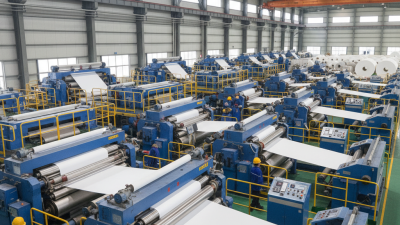
Choosing a reliable Tensioner Machine manufacturer requires more than comparing catalog prices. Buyers must examine engineering depth, field experience, safety controls, and after-sales support. A machine may look powerful on paper. Real performance appears under load.
Dr. Matthias Klein, a mechanical systems engineer specializing in hydraulic tensioning, says, “Accuracy is valuable only when the machine remains stable, serviceable, and predictable.” His observation reflects a practical truth. Tensioning work often happens beside pipelines, wind turbines, bridges, or heavy industrial assemblies. Operators need controlled force, repeatable results, and clear pressure readings. They also need equipment that technicians can inspect without wasting an entire shift.
This “Top 10 Tensioner Machine Manufacturers Worldwide” overview evaluates manufacturers through several visible factors. These include hydraulic accuracy, torque or tension capacity, material quality, automation options, certification practices, customization, delivery performance, and technical training. Customer support also matters. A fast response can prevent a minor seal problem from becoming costly downtime.
The ranking is not perfectly universal. Different industries require different strengths. An offshore contractor may prioritize corrosion resistance, while a wind-service team may value portability and remote monitoring. Some manufacturers publish impressive specifications but provide limited field evidence. That gap deserves attention.
Readers should treat this guide as a research starting point, not an automatic purchasing decision. Verify current models, regional service coverage, operating limits, and documented test results before selecting equipment. The best Tensioner Machine is not always the largest or most expensive. It is the one that fits the work, the crew, and the actual risk.
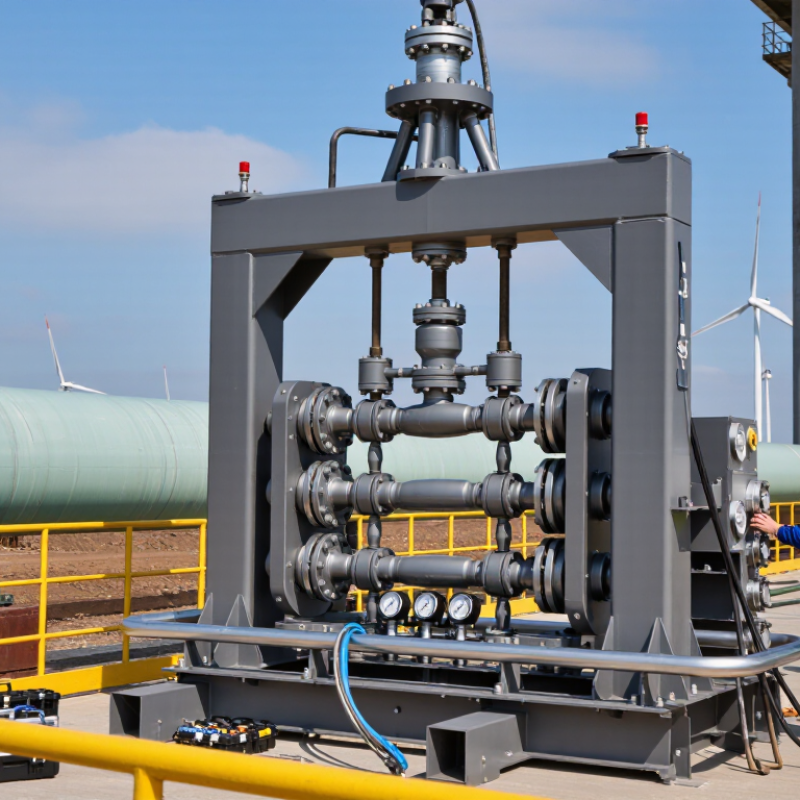
What Is a Tensioner Machine and How Does It Work?
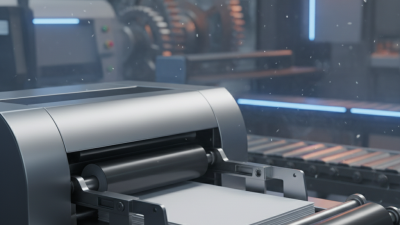
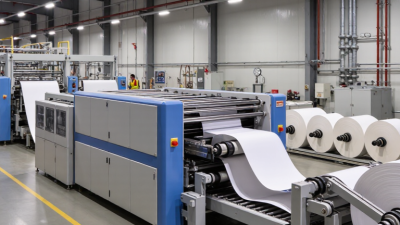
A tensioner machine controls pulling force while cable, wire, rope, or composite material moves between reels. It prevents loose loops, sudden shocks, and uneven winding. In practice, an operator sets the required tension on a touchscreen. A motor, hydraulic brake, or friction system then resists the moving material. Load cells measure force continuously. A controller adjusts torque when the reel diameter changes.
Modern systems often combine a pay-off stand, dancer arm, encoder, and take-up reel. The dancer arm absorbs small speed changes. The encoder tracks line speed. This matters during submarine cable handling, overhead line installation, and factory winding. The Global Wind Energy Council reported 117 gigawatts of new wind capacity in 2023. That expansion increases demand for controlled cable handling during construction. The International Energy Agency also recorded 473 gigawatts of global renewable capacity additions in 2023. These figures show why precise tension control is becoming more important.
A practical top-ten manufacturer review should examine force accuracy, maximum line speed, reel diameter, service access, and safety controls. Ask for calibration records. Check performance under wet, dusty, and cold conditions. Some brochures promise impressive peak loads, but continuous load is more useful. That distinction is easy to miss. MarketsandMarkets identifies automation and electrification as major drivers in the wire and cable sector, yet real-site performance can still vary widely. A machine may perform perfectly in a test bay, then struggle with stiff cable, poor alignment, or an inexperienced operator.

When comparing the Top 10 Tensioner Machine Manufacturers Worldwide, evaluate more than product price. A dependable manufacturer should provide load accuracy data, calibration certificates, material traceability, and documented safety procedures. ISO’s Survey 2022 recorded more than 1.2 million ISO 9001 certificates worldwide, but certification alone does not prove tool performance. Request recent test reports and inspect how calibration results are controlled.
Engineering depth matters in difficult environments. Hydraulic tensioners may operate near turbines, bridges, or high-pressure equipment. The Global Wind Energy Council’s Global Wind Report 2024 recorded 117 GW of new wind capacity in 2023, showing rising demand for reliable bolting equipment. Ask whether the manufacturer supports different bolt sizes, working pressures, corrosion conditions, and emergency maintenance. Spare-seal availability matters. So does response time.
Tips: Build a scorecard before requesting quotations. Give accuracy, safety, service, and delivery separate scores. Check references from projects with similar bolt loads. Read the manual carefully; vague limits deserve questions. A cheaper machine can become expensive after one failed calibration cycle. No scorecard is perfect. Recheck your assumptions after field trials.
| Rank | Anonymous Manufacturer Profile | Primary Tensioner Product Scope | Typical Maximum Tension Capacity | Control and Measurement | Application Coverage | Quality and Compliance Indicators | Global Service Capability | Typical Delivery Position | Evaluation Score |
|---|---|---|---|---|---|---|---|---|---|
| 1 | Manufacturer Profile A | Hydraulic, electronic, and fully automatic tensioners for heavy industrial installations | Up to approximately 2,000 kN, depending on cylinder configuration | Closed-loop tension control, pressure monitoring, digital data logging, and overload protection | Wind towers, bridges, oil and gas, power generation, mining, and heavy machinery | Documented load testing, traceable calibration, ISO 9001-based quality systems, and CE-oriented documentation | Distributor and service coverage across Europe, North America, Asia, and the Middle East | Stocked standard systems with engineered configurations available | 94 / 100 |
| 2 | Manufacturer Profile B | Hydraulic bolt tensioners, subsea tensioning systems, and multi-tool packages | Up to approximately 1,500 kN for standard industrial configurations | High-accuracy hydraulic pressure-to-load conversion with optional remote monitoring | Offshore platforms, shipbuilding, petrochemical plants, turbines, and structural projects | Material certificates, calibration records, safety documentation, and controlled manufacturing procedures | Regional technical teams with offshore support and rental-equipment options | Standard products generally available; customized systems require engineering review | 92 / 100 |
| 3 | Manufacturer Profile C | Electric and hydraulic tensioners designed for repetitive assembly and maintenance work | Up to approximately 1,200 kN | Programmable tension cycles, digital displays, torque-and-tension records, and fault alarms | Industrial machinery, steel structures, rail, energy equipment, and general maintenance | ISO 9001 quality management, documented factory acceptance testing, and electrical safety controls | Strong dealer network with multilingual technical documentation | Short lead times for common sizes; medium lead times for automated packages | 90 / 100 |
| 4 | Manufacturer Profile D | Mechanical and hydraulic tensioning tools for construction and structural engineering | Up to approximately 1,000 kN | Pressure gauges, calibrated reference charts, optional electronic sensors, and repeatability checks | Bridges, towers, cranes, construction equipment, and power transmission systems | Load verification reports, component traceability, CE documentation, and operator safety guidance | Established regional distributors and field-service partnerships | Good availability for standard hydraulic tools | 88 / 100 |
| 5 | Manufacturer Profile E | Compact hydraulic tensioners and low-clearance tools for confined work areas | Up to approximately 800 kN | Manual or semi-automatic hydraulic control with pressure relief and calibrated gauges | Flanges, heat exchangers, turbines, industrial maintenance, and process equipment | Controlled dimensional inspection, pressure testing, spare-parts identification, and safety labeling | Good support through industrial-tool distributors in major manufacturing regions | Fast delivery for compact and standard models | 86 / 100 |
| 6 | Manufacturer Profile F | Multi-point tensioning systems for large flanges and synchronized bolting operations | Up to approximately 700 kN per tool, with higher combined system capacity | Synchronized hydraulic control, pressure balancing, and optional cycle documentation | Refineries, chemical processing, power plants, offshore modules, and large pipelines | Application engineering, hydraulic testing, risk assessments, and project-specific method statements | Project-based support with trained partner technicians | Lead time varies according to hose, pump, and synchronization requirements | 84 / 100 |
| 7 | Manufacturer Profile G | Manual, hydraulic, and electric tensioners for general industrial fastening | Up to approximately 600 kN | Digital pressure readouts, adjustable tension settings, and basic data recording options | Manufacturing plants, machinery assembly, transport infrastructure, and utilities | Standardized inspection records, product manuals, calibration services, and replacement seals | Broad regional distribution with remote technical assistance | Competitive availability for standard products and consumables | 82 / 100 |
| 8 | Manufacturer Profile H | Portable tensioning equipment for maintenance contractors and field-service teams | Up to approximately 500 kN | Pressure-based load estimation, optional digital gauge, and straightforward manual adjustment | Plant maintenance, construction, mining service, and mechanical installation | Factory pressure testing, operating instructions, service kits, and basic calibration support | Growing international distributor network with contractor-oriented training | Generally short delivery times for portable models | 80 / 100 |
| 9 | Manufacturer Profile I | Special-purpose tensioners and engineered systems for non-standard bolt patterns | Project-dependent; commonly up to approximately 450 kN per tool | Custom hydraulic circuits, position monitoring, and application-specific measurement systems | Special machinery, research facilities, aerospace support equipment, and complex structures | Engineering drawings, design calculations, acceptance testing, and customer-specific documentation | Direct engineering support with limited but specialized service locations | Longer lead times because of custom design and validation requirements | 78 / 100 |
| 10 | Manufacturer Profile J | Cost-efficient hydraulic tensioners for standard industrial and construction applications | Up to approximately 350 kN | Analog gauges, pressure-limiting valves, manual pump control, and optional calibration service | General fabrication, construction, agricultural machinery, and routine plant maintenance | Basic quality inspection, pressure testing, user manuals, and standard spare-parts availability | Primarily distributor-led support with regional repair capability | Short delivery times for common models and replacement components | 75 / 100 |
Top 10 Tensioner Machine Manufacturers Worldwide
A practical review of the top ten tensioner machine manufacturers should begin with working performance. These machines control cable, wire, pipe, or composite tension during installation and production. Reliable manufacturers usually offer precise torque control, stable braking, and clear digital monitoring. Accuracy matters. Small errors grow quickly.
The strongest global manufacturers often serve energy, construction, marine, and industrial production sectors. Their machines may include hydraulic, electric, or pneumatic systems. Buyers should inspect pulling capacity, line speed, drum compatibility, and emergency stopping functions. Field experience also shows that simple maintenance can matter more than impressive specifications. Easy access to seals, sensors, and control panels reduces downtime.
A trustworthy manufacturer provides testing records, calibration guidance, training, and responsive technical support. Service coverage matters when equipment operates far from a factory. Operators should request evidence from comparable projects, not only polished brochures. No ranking is flawless. Performance can change between models, regions, and service teams. I would also recheck warranty terms and spare-part delivery times before making a final decision. One overlooked detail can affect an entire installation.
The leading tensioner machine manufacturers compete through control accuracy, product flexibility, and practical field support. Their systems commonly use servo drives, load cells, pneumatic brakes, and closed-loop feedback. These technologies maintain stable tension during winding, unwinding, braiding, and cable processing. However, impressive specifications do not always guarantee reliable production. Installation quality, operator training, and replacement-part access can matter just as much.
Product ranges often include compact bench units, heavy-duty pay-off systems, automatic reel tensioners, and custom production lines. Applications cover wire and cable manufacturing, textiles, packaging, steel processing, composite materials, and film conversion. Experienced manufacturers usually provide tension records, test procedures, and application engineering before delivery. Buyers should examine torque ranges, speed limits, material compatibility, and control integration. A machine designed for delicate film may fail under heavy industrial loads.
No ranking is perfect.
Tips: Request a sample trial using your real material and operating speed. Check tension stability at startup, during reel changes, and near the final roll diameter. Ask for maintenance intervals and calibration guidance. Review service response times in your region. Small details reveal more than polished brochures.
When comparing tensioner machine manufacturers worldwide, start with your actual worksite, not a glossy ranking. Record cable diameter, required tension, line speed, duty cycle, and available power. A supplier should match those values with a documented operating range. Ask for evidence. Request load charts, calibration records, material data, and test results from a comparable machine. Vague capacity claims create expensive surprises during commissioning.
In field evaluations, I pay close attention to construction details. The frame should feel rigid, while rollers turn smoothly without sharp edges or unusual vibration. Controls need readable displays, emergency stops, and simple tension adjustment. Ask whether technicians can service the brake, gearbox, sensors, and hydraulic parts locally. Downtime is rarely caused by the purchase price alone. One manufacturer once impressed me with speed, but its spare-parts answers were slow. That weakness changed the final decision.
Check the manufacturer’s quality system, factory inspection process, operator training, and after-sales response times. Independent certifications help, but traceable records matter more than framed certificates. Speak with users running similar loads and request a supervised acceptance test. Do not overlook documentation. It should cover installation, calibration intervals, maintenance points, and fault codes. Some offers look complete until you ask who pays for commissioning or shipping damaged components. I still revise my checklist after each project; real sites expose assumptions that brochures hide.