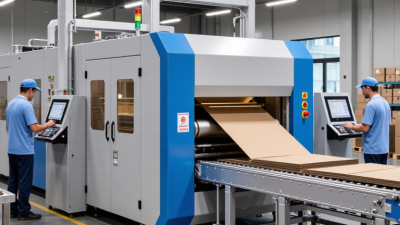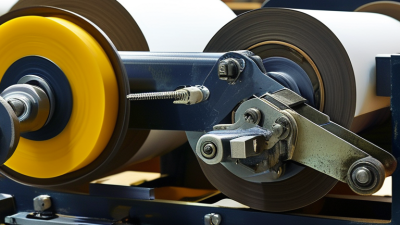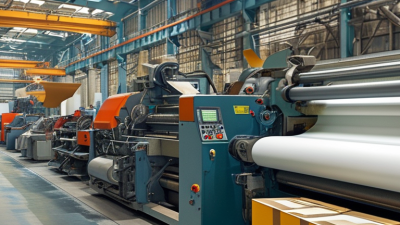
China’s Tensioner Machine market includes equipment makers, component suppliers, and integrators serving cable, wire, textile, and packaging lines. Comparing them takes more than checking a catalogue. Buyers should examine tension range, line speed, material compatibility, control response, and maintenance access. A machine that handles thin film smoothly may not suit heavy cable. Small differences matter.
A useful expert takeaway, paraphrasing web-handling specialist Dr. David R. Roisum’s work, is: “Stable tension depends on the entire material path, not one component.” Treat that as a principle, not a verified verbatim quotation. During supplier evaluations, ask how sensors are calibrated, how settings change between materials, and what support is available after installation. Request test data for your actual operating conditions. Ask to see a working unit, if possible. A polished brochure cannot show how a system behaves during a sudden speed change.
This guide examines China’s leading Tensioner Machine manufacturers and suppliers, their product capabilities, and practical selection factors. It also considers customization, quality checks, delivery communication, and after-sales service. Supplier claims deserve careful review; public information may be incomplete, and product performance varies by configuration. That is worth admitting. A lower quoted price can look attractive, but installation, spare parts, and downtime affect the real cost. Compare evidence, not promises, before choosing a partner.
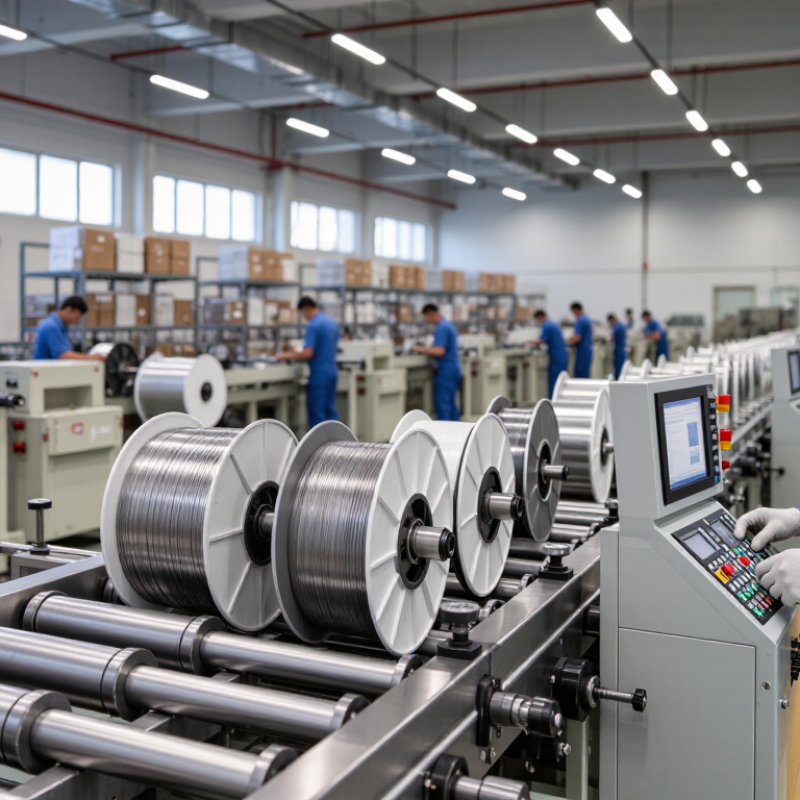
Hydraulic, pneumatic, and electric tensioners each suit different production conditions. Hydraulic systems deliver strong, steady force, making them useful for heavy loads or long operating cycles. Operators should check pressure stability, hose condition, and oil temperature during testing. A warm hydraulic line can signal excessive duty or poor system matching. That matters.
Pneumatic tensioners respond quickly and use compressed air, so they fit repetitive tasks where speed and simple controls are priorities. Their performance depends on stable air pressure. Moisture in the line can also affect valves and seals, a detail that is easy to miss during a brief factory visit.
Electric models offer precise adjustment and repeatable settings. They can be easier to integrate with sensors, but buyers should review motor capacity, control response, and protection against dust or vibration.
When comparing Chinese manufacturers and suppliers, ask for force ranges, duty-cycle data, test records, and maintenance instructions for the exact configuration. A sample run with your actual cable, strap, or workpiece can reveal slipping and tension variation. Catalog figures are useful, but they do not show every production weakness. I would also inspect spare-part access and operator training. It is not always the cheapest system that saves time.
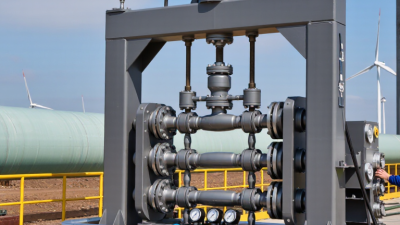
China’s tensioner machine sector serves cable laying, rope handling, and heavy industrial installation. The IEA reported 473 GW of renewable capacity additions in 2023. GWEC recorded 117 GW of new wind capacity that year. These figures indicate sustained demand for controlled cable handling equipment.
A practical specification range is 5–500 kN tension and 0–100 m/min line speed. Low tension supports delicate cable placement. High tension suits long, heavy routes. However, maximum tension and maximum speed rarely operate together. Buyers should request load curves, not only headline values. A useful control target is tension accuracy within ±1% of full scale. Better systems may reach ±0.5%, but calibration methods must be checked.
Details matter on site. Inspectors should verify sensor certificates, emergency stopping time, drum compatibility, and recorded tension data. A stable machine should maintain tension during acceleration, braking, and uneven cable payout. Industry quality reports often emphasize traceability and repeatable testing, yet supplier documents can remain incomplete. That is a real weakness. I would also question “100 m/min” claims without knowing the cable diameter, load, and duty cycle. A factory evaluation should include a witnessed test, thermal monitoring, and several repeated runs. Quiet operation helps, but it does not prove accuracy.
China Top Tensioner Machine Manufacturers and Suppliers?
When evaluating Chinese tensioner machine suppliers, certificates should support evidence, not replace it. ISO 9001 indicates a documented quality system, but it does not guarantee every machine performs well. Request the certificate number, valid dates, covered products, and issuing body. Check whether the scope includes manufacturing, assembly, testing, or only trading activities. Small details matter.
CE compliance depends on the machine design, destination market, and applicable directives. Ask for the Declaration of Conformity, risk assessment, electrical diagrams, and safety test records. API requirements may apply to oilfield or pipeline-related equipment, but an API logo alone proves little. Confirm the exact standard, product category, certificate scope, and inspection history. Documents can look convincing.
Factory capability needs physical verification. A reliable manufacturer should show machining equipment, welding areas, load-testing facilities, calibration records, and traceable component storage. During a factory visit, inspect hydraulic hoses, drums, control panels, emergency stops, and protective guards. Ask for a recorded factory acceptance test using realistic line tension. Measure response speed and braking stability. Do not accept only photographs. Maintenance manuals, spare-parts planning, operator training, and after-sales response also reveal maturity. In practice, evaluation is not perfectly clean; some suppliers have strong engineering but weak documentation. Others present excellent paperwork but limited production depth. A balanced audit should record both strengths and uncomfortable gaps.
| Evaluation Dimension | Industry-Accurate Requirement or Reference | Recommended Verification Data | Evaluation Result |
|---|---|---|---|
| Quality Management | ISO 9001 is an internationally recognized quality-management standard. Certification should cover the manufacturing site and the relevant product or engineering activities. | Valid certificate, certification scope, issuing certification body, site address, expiry date, and audit status. | Recommended |
| CE Compliance | CE marking may be required when a machine is placed on the European Economic Area market and falls within applicable European product-safety legislation. It is not a universal quality certificate. | Declaration of Conformity, applicable directives or regulations, risk assessment, technical file availability, user manual, and safety test records. | Market-Dependent |
| API-Related Capability | API certification is relevant only when the supplier manufactures products or systems covered by a specific API standard or licensed program. API certification is not automatically required for every hydraulic tensioner. | Exact API specification, certificate number, product scope, licensed facility details, and confirmation that the certificate applies to the supplied equipment. | Application-Specific |
| Hydraulic Pressure Range | Hydraulic bolt tensioners are commonly configured for high-pressure operation, with many industrial systems designed around pressures up to approximately 700 bar. The allowable pressure must match the tool design. | Rated working pressure, maximum test pressure, pressure gauge accuracy, hose rating, relief-valve setting, and pressure-test report. | Verify by Model |
| Bolt Size Coverage | Tool coverage depends on cylinder design, nut size, stud diameter, load requirement, and available clearance. A single tensioner normally does not cover every bolt size. | Published bolt-diameter range, thread compatibility, load chart, interchangeable bridge or puller data, and dimensional drawings. | Verify by Application |
| Tensioning Accuracy | Achievable preload accuracy depends on hydraulic pressure, friction, thread condition, calibration, alignment, and the joint procedure. A stated accuracy value must be supported by a defined test method. | Calibration certificate, calibration interval, test standard or procedure, repeatability data, and sample joint test results. | Evidence Required |
| Material and Construction | Load-bearing components should be manufactured from traceable alloy steel or other engineering materials suitable for the specified working load and fatigue conditions. | Material certificates, heat-treatment records, hardness results, non-destructive testing records, and component traceability. | Recommended |
| Factory Production Capability | A capable factory should control machining, heat treatment, assembly, hydraulic testing, calibration, and final inspection rather than relying entirely on undocumented subcontracting. | Production-process flow, equipment list, inspection plan, quality-control personnel, subcontractor controls, and production records. | Recommended |
| Machining and Inspection | Critical cylinders, pistons, threads, sealing surfaces, and load-bearing interfaces require controlled dimensional inspection and suitable measuring equipment. | CNC or precision-machining capability, coordinate or dimensional inspection records, gauge calibration, surface-finish data, and inspection tolerances. | Recommended |
| Hydraulic Safety Testing | Each hydraulic tool should be tested for leakage, pressure holding, functional operation, and safe release before shipment. | Pressure-hold record, leakage inspection, functional test report, serial-number traceability, and final inspection checklist. | Recommended |
| Product Documentation | Professional documentation should explain installation, hydraulic connection, tightening sequence, operating limits, maintenance, storage, and safety precautions. | English manual, exploded parts drawing, spare-parts list, maintenance schedule, risk warnings, and technical data sheet. | Recommended |
| Customization Capability | Project requirements may include special bolt sizes, low-clearance designs, subsea protection, custom hydraulic pumps, or specific flange and joint configurations. | Engineering drawing approval process, design-change control, prototype procedure, application calculation, and sample approval records. | Project-Dependent |
| Testing and Calibration Support | Regular calibration and documented maintenance are essential for repeatable bolt preload, especially in critical oil, gas, power-generation, and heavy-industrial applications. | Calibration service capability, recommended calibration interval, replacement seals, repair lead time, service personnel, and after-sales process. | Recommended |
| Supply and Export Readiness | International supply capability includes stable packaging, spare-part availability, export documentation, warranty terms, and clear delivery conditions. | Commercial invoice and packing-list process, export packaging specification, warranty period, spare-parts policy, delivery lead time, and Incoterms. | Recommended |
Note: Certification and performance claims should be verified against the exact manufacturing site, product model, application, and current certificate validity. API and CE requirements are dependent on the product scope and destination market.
When comparing China’s tensioner machine suppliers, begin with the load range, not the headline maximum. Ask for continuous and peak tension, line speed, compatible material diameter, and duty-cycle limits. A machine rated for a brief peak may behave differently during an eight-hour shift. Request a test record using material close to your own. Small differences matter.
Customization should be specified in measurable terms: sensor accuracy, control interface, frame dimensions, guarding, and language options. Ask which changes are standard and which require new engineering. The World Bank’s 2023 Logistics Performance Index assessed 139 economies across six areas, including shipment timeliness and tracking. It is not a machine-delivery benchmark, but it shows why a quoted lead time should include component sourcing, factory testing, and transport—not just assembly.
Compare lead times against written milestones: drawing approval, build completion, factory acceptance test, and dispatch. Then check service details, including remote troubleshooting hours, spare-parts availability, manuals, and technician response targets. Request a sample parts list before ordering. This comparison is not perfect; suppliers may define “standard” differently, and a polished quotation can still omit practical limits. Get exceptions in writing.
When comparing China’s tensioner machine suppliers, safety evidence should come before price. Ask for a risk assessment aligned with ISO 12100:2010 and a control-system validation report under ISO 13849-1:2023. The file should show emergency-stop response, guard interlock tests, braking distance, electrical insulation, and abnormal-load trials. EN 415-8 also provides useful safety guidance for packaging and strapping machinery. Do not accept only a certificate scan. Request dated test records, serial numbers, and video evidence from the final machine.
Testing data must reflect real production. Require at least 100 continuous tensioning cycles, belt-slip measurements, tension accuracy, noise levels, and restart performance after a power interruption. For electrical systems, IEC 60204-1 offers a practical reference. Smithers’ packaging market forecast places global packaging demand above US$1.2 trillion by 2028, increasing pressure on uptime and repeatable tension. Yet a higher cycle count does not automatically prove durability. The test method may be weak. Review it carefully.
Warranty terms should specify covered parts, response time, remote support, and travel charges. A 12-month warranty is common, but its exclusions matter more. Calculate total cost over five years: purchase, freight, installation, training, energy, spare parts, calibration, downtime, and disposal. PMMI automation research repeatedly identifies labor availability and maintenance capability as major investment concerns. Therefore, favor accessible wear parts and clear manuals. I would still keep a contingency budget; suppliers sometimes underestimate commissioning delays.
Suggested weighting for comparing suppliers—not survey results or ratings of specific companies.
Prioritize machine guarding and documented risk assessment, then verify performance with application-relevant test data. Review warranty coverage and service response alongside total cost of ownership, including installation, energy use, maintenance, and consumables. Relevant standards to discuss with suppliers may include ISO 12100 for machinery risk assessment, ISO 13849-1 for safety-related control systems, and IEC 60204-1 for electrical equipment; confirm applicable requirements for your machine and destination market.